Is Cycling In Athens Safe? Traffic, Surfaces And Rules
Athens is a dense, traffic-heavy capital with marble paving, tour buses and a hill at almost every turn, and the question of whether cycling there is safe has three parts: the road code is stricter than most visitors expect, the surfaces demand respect, and a guided group ride removes most of the decisions that catch solo riders out.
Short answer
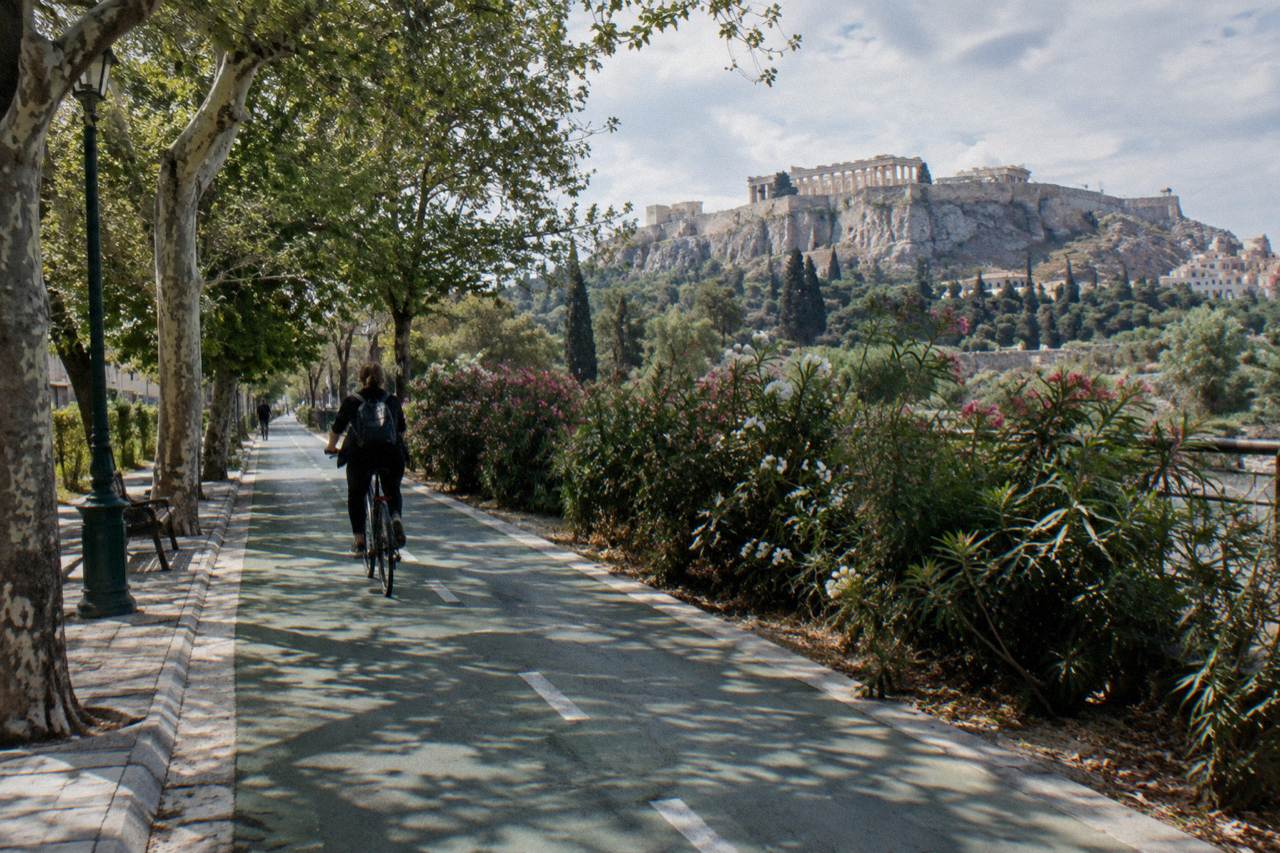
Cycling in Athens is safe for visitors who respect two things: the surfaces and the road code. Law 5209/2025 sets real fines for cyclists, from 30 EUR for riding two abreast to 350 EUR for holding a phone. Guided rides, from $33.24 per person, hand route choice, traffic calls and helmet provision to a local guide.
What Does The Greek Road Code Say About Cyclists?
Athens is governed by the Greek Road Traffic Code, Law 5209/2025, and it treats bicycles as full road vehicles with specific duties. Helmets are recommended but not mandatory for bicycle and e-bike riders, riding two abreast is banned, holding a phone or smartwatch carries a 350 EUR fine, and headphones carry the same 350 EUR fine. A guided ride does not exempt a visitor from any of it, but a guide makes the compliant choices automatic. To see how those rules play out in the everyday missteps that catch visitors out, read our companion piece on the common cycling mistakes to avoid in Athens.
The law was published in the Government Gazette on 13 June 2025 and it replaced the older code most guidebooks still describe. Under Article 44 of the road code, cyclists must keep both hands on the handlebar except when signalling, must signal turns by hand if the bike has no indicators, and must dismount and walk whenever they obstruct or endanger pedestrians. That last duty matters more in Athens than in most capitals, because the areas visitors want to ride, Plaka and the streets below the Acropolis, are full of pedestrians for most of the day.
The fines are published, not theoretical. The Ministry of Infrastructure and Transport's penalty table lists most minor cyclist violations at 30 EUR: riding two abreast, missing hand signals, riding without both hands on the bar, and a child under 12 cycling on a road open to motor vehicles without an accompanying person aged 16 or over. Running a red bicycle signal costs 150 EUR. Holding a phone or a smartwatch-type device while riding costs 350 EUR, and so does wearing headphones connected to an audio device. Open-ear radio communication between riders, which some guided groups use, is the exception written into the law.

One more rule shapes night riding: Article 80 requires one white or yellow front light, one red rear light or reflector, at least one side reflector per pedal side, and a yellow reflector on each pedal. Some racing and mountain bikes are exempt, but a city bike used after dark is not. The practical takeaway for a visitor is simple: rent or ride a bike that carries its lights, or book a tour that provides them.
| Rule for cyclists | Fine | Where it applies |
|---|---|---|
| Holding a phone or smartwatch while riding | 350 EUR | All roads |
| Wearing headphones connected to a device | 350 EUR | All roads |
| Running a red bicycle signal | 150 EUR | Signalised junctions |
| Riding two or more abreast | 30 EUR | All roads |
| Missing hand signals or one-handed riding | 30 EUR | All roads |
| Child under 12 cycling without a person aged 16+ | 30 EUR | Roads open to motor vehicles |
| No lights or reflectors after dark | 30 EUR | Night riding |
| Alcohol impairment from 0.50 g/l blood | As for any road vehicle | All roads |
The alcohol point deserves a plain sentence. There is no cyclist-specific threshold: Article 46 covers every road vehicle, and impairment starts from 0.50 g/l in blood or 0.25 mg/l in breath. A long lunch in Plaka with wine, followed by a bike, is a legal risk in Greece in a way it is not everywhere in Europe.
Which Athens Streets And Surfaces Cause The Most Trouble?
The two hazards that define Athens cycling are polished marble and peak-hour traffic, and they rarely appear together. Marble paving in the historic centre is slippery when dry and treacherous when wet, while the wide boulevards carry buses and motorcycles that filter fast between lanes. A rider who slows to walking pace on marble and keeps a straight, predictable line on the avenues handles most of what the city will throw at them.
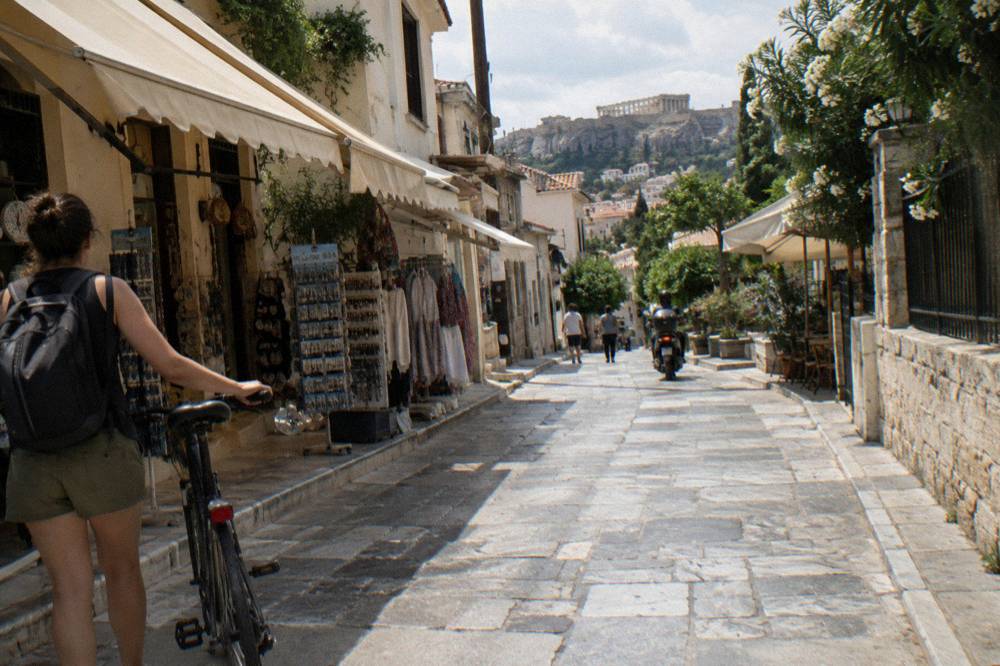
Marble is the surface that surprises visitors. Much of the pedestrianised centre is laid with smooth stone that is worn to a shine, and that stone offers very little grip when wet, even in a light shower. A fall here is a scraped palm or worse, and the standard advice from every local operator is to dismount and walk the busiest historic stretches. The road code backs this up: the 30 EUR dismount duty applies wherever a rider obstructs or endangers pedestrians, and in Plaka at midday that describes almost every metre.
The traffic itself is less hostile than its reputation suggests, but it moves differently. Motorcycles and scooters filter between lanes and along the left edge, buses pull in and out, and drivers are used to bicycles because Athenians commute on them. The skill a visitor lacks is not courage but expectation: knowing where a bus will stop, hearing the scooter that is still half a block back, and holding a line steady so that faster traffic can predict where the bicycle will be.
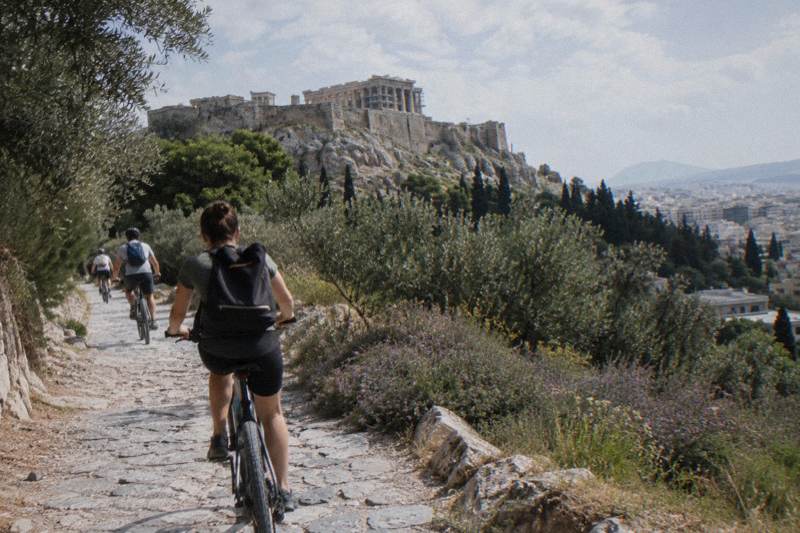
Hills change the picture again. The routes up toward the Acropolis, Lycabettus and the other rock outcrops are steep enough that a regular bike means standing on the pedals in low gear, and descents mean long braking runs on worn stone. This is where the e-bike question becomes a safety question rather than a comfort one, and it is worth reading the electric bike versus regular bike comparison before choosing a ride.
| Surface or situation | Why it needs respect | The practical response |
|---|---|---|
| Polished marble paving | Near-zero grip when wet | Slow to walking pace or dismount |
| Pedestrianised historic streets | Crowds all day | Walk the busiest stretches |
| Wide boulevards at peak hours | Buses, filtering scooters | Hold a straight, predictable line |
| Cobbled uphill lanes | Loose stones, steep grade | Low gear, or an e-bike |
| Roundabouts | Fast, multi-lane traffic | Take the lane or route around |
Riders who want a first taste of city cycling without the decision load can start with the tours aimed at beginners, where the route is chosen for exactly these reasons.
How Do Guided Bike Tours Manage Traffic Risk?
Guided bike tours manage traffic risk by shifting decisions away from the individual rider: the guide chooses the route, group sizes stay small with maximums of 6 to 20 riders, helmets are provided on rides that list them, and the pace is set by the slowest person. This is not a promise of safety, but it removes the guesswork behind most visitor incidents.
The mechanics matter more than the marketing. A guide rides at the front, watches junctions before the group reaches them, and signals turns with arm gestures that match the hand-signal law rather than fighting it. A second benefit is quieter: guided routes stick to calmer streets, since a professional operator will not take a group of visitors onto the busiest, fastest traffic of the day. The route is a safety decision made by someone who rides it weekly.
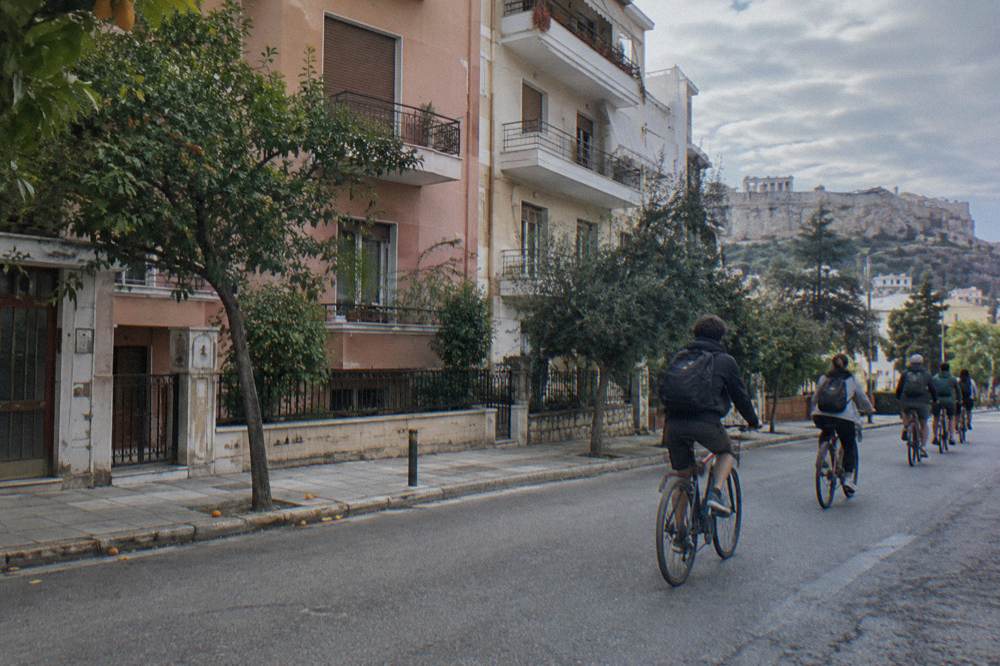
Take the rides collected on Bike Tours Athens as examples of how the format varies. The most reviewed ride on the site, the Regular or E-Bike, Optional Acropolis tour, runs 2 hours 30 minutes with a group maximum of 12, a helmet included, and a choice between a regular bike and an e-bike, from $40.12 per person. Its small-group sibling, the Small Group, Optional Acropolis Stop ride, keeps the same duration and the same 12-rider cap at from $33.24 per person, rated 5.0 across 1,264 reviews. The private option, Private Electric Bike, 3 Hours, removes the strangers entirely at from $80.23 per person, with the total depending on group size as the booking page shows. You can read the full tour description and check availability when the dates are fixed.
The same logic explains why the site leans on small groups rather than big ones. The Historic E-Bike, 1.5 to 2.5 Hours ride caps at 20 riders with helmet and guide included, from $50 per person and rated 4.9 across 1,474 reviews, while the Highlights Of Athens ride caps at 12 on regular bikes with a helmet, from $45.28 per person and rated 4.9 across 906 reviews. A dozen riders behind one guide move through traffic as a predictable unit; twenty is a procession, and a procession makes more of its own hazards.
One honest caveat: no operator can promise traffic conditions, crowds or weather, and none of the listings here try to. What the listings describe is the format, the inclusions and the free cancellation policy, and the format itself is the safety feature.
| Guided ride | Group maximum | Bike type | Helmet included | From price per person |
|---|---|---|---|---|
| Regular or E-Bike, Optional Acropolis | 12 | Rider chooses | Yes | $40.12 |
| Small Group, Optional Acropolis Stop | 12 | Rider chooses | Yes | $33.24 |
| Historic E-Bike, 1.5 to 2.5 Hours | 20 | E-bike | Yes | $50 |
| Highlights Of Athens, 3-Hour Ride | 12 | Regular bike | Yes | $45.28 |
| Private Electric Bike, 3 Hours | Private | E-bike | Yes | $80.23 |
Do You Have To Wear A Helmet In Athens?
No. For bicycle and e-bike riders a helmet is recommended, not mandatory, under Article 44 of Law 5209/2025, and no fine attaches to a bare head on a bicycle. The 30 EUR mandatory-helmet fine in the same paragraph applies only to riders of e-scooter-type light personal electric vehicles. Most guided tours here include a helmet in the price, and each listing's booking page spells out exactly what is provided, which tells a visitor what local professionals think of the recommendation.
The distinction matters because Athens marketing often blurs it. E-bikes sold as bicycles, which is what every e-bike tour on this site uses, fall under the recommended-not-mandatory rule. Stand-on e-scooters do not. A visitor who rides a bicycle bare-headed is legal, if taking a risk the law itself points at with the word "recommended" in the gazetted text.
The tour side of the question is simpler. The rides that list a helmet as included provide one in the price, and the rides that do not list it say nothing either way. A rider who wants a helmet can filter for it before booking, and anyone riding independently should bring or rent one, because a head injury on marble is the same injury whatever the law says.
Children are the one case where the law gets strict. A rider under 12 may not cycle on a road open to motor vehicles unless accompanied by a person aged 16 or over, with a 30 EUR fine attached. Families planning more than a ride around a park should read the Athens bike tours with kids guide, which covers the operator age policies the booking pages state.
Is Riding An E-Bike In Athens Safe?
An e-bike is arguably the safer choice in Athens, not the more dangerous one. The hills around the centre push a regular rider into tired, wobbly climbing in low gear, while an e-bike holds a steady line uphill and keeps a rider's attention free for traffic. Every e-bike tour here runs on bikes sold as bicycles, so the helmet rule stays recommended, and group sizes stay small, from a maximum of 6 to 20 riders.
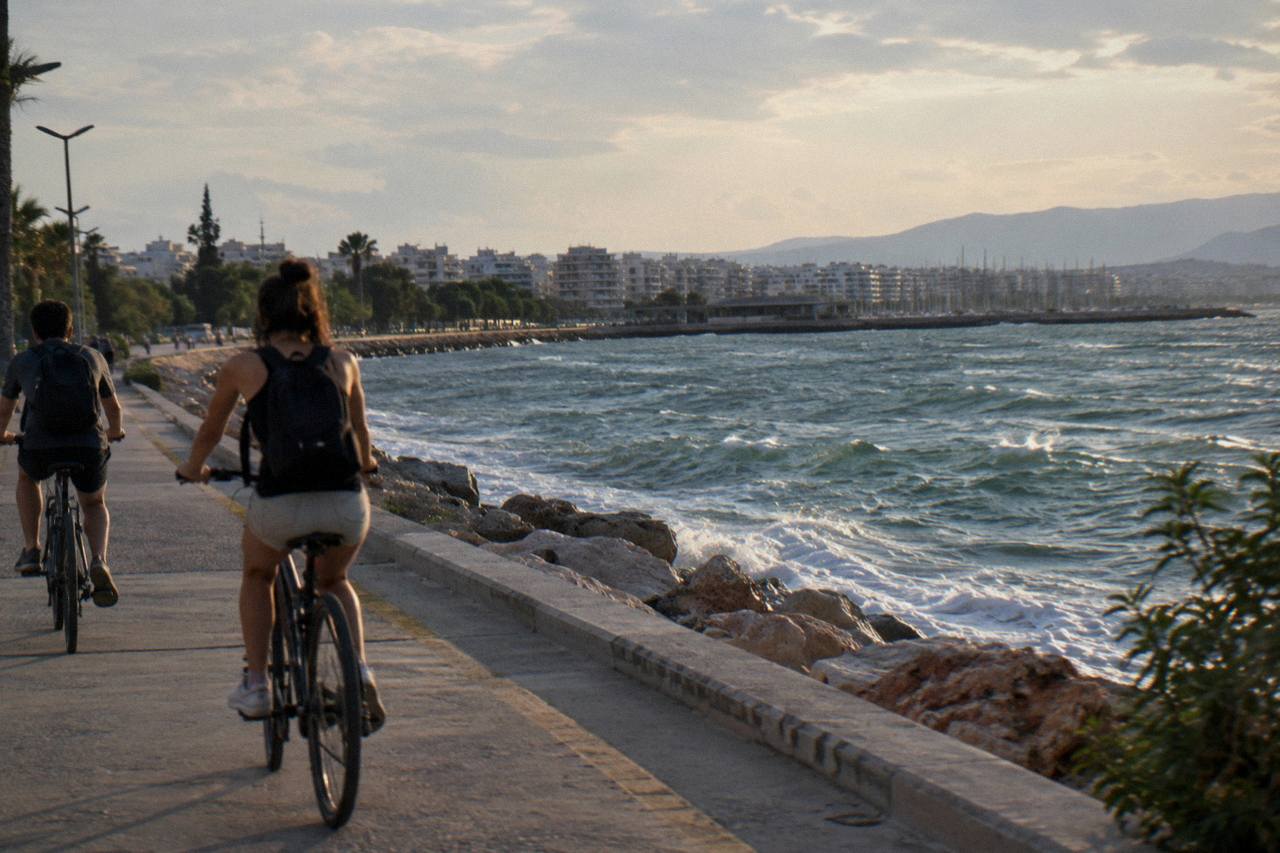
The argument for e-bikes on hills is energy management. A tired rider late in a ride is the one who stalls on a hill, wobbles at a junction, or brakes late on a descent. Pedal assistance removes most of that fatigue curve. Against that stands one real caution: an e-bike arrives at junctions faster than a visitor expects, and the first ten minutes on an unfamiliar machine should be ridden gently while the response to the throttle or the assist level becomes familiar.
The operator side handles much of this. The E-Bike Hidden Gems and Highlights ride, for example, runs 3 hours with a guide included at a group maximum of 12, from $38 per person and rated 5.0 across 56 reviews. The City To Sea E-Bike, Pastry Tasting ride extends the same format to 4 hours 30 minutes at a maximum of 15 riders, from $51.58 per person, rated 4.9 across 273 reviews. Both include the bike, and both describe free cancellation per the listing.
Riders comparing the two formats across the full site will find the trade-offs set out in the e-bike versus regular bike guide. The short version for safety: choose the e-bike if the itinerary includes hills or distance, and choose the regular bike if the plan is a flat, short loop of the centre at a slow pace.
Is It Safe To Cycle In Athens At Night?
Night riding in Athens is legal and common, and the law sets the conditions: front and rear lights, pedal reflectors, and no headphones. The city centre stays busy after dark, which helps visibility, but marble that is fine at noon can be damp and slick at nine. Guided night rides from $51 to $54 per person provide the lights, the route and the group, which is the format most visitors should choose for a first night ride.
The equipment duty is the visitor's main legal exposure. Article 80 requires the full light and reflector set after dark, and the 30 EUR fine for riding without it is small compared with the practical risk of an unlit bike on a street where scooters filter fast. Any rental should come with lights, and any tour that runs after sunset should provide them or state that riders must.

The guided night options follow the same small-group pattern as the daytime rides. The 2-Hour Highlights Tour by E-Bike After Sunset from We Bike Athens runs 2 hours with bike, helmet, guide and bottled water included, from $54 per person and rated 4.9 across 580 reviews. The Night Ride, Greek Treat Included tour from electricityrides runs 3 hours at a group maximum of 8, from $51 per person, rated 4.8 across 105 reviews, with a bottle of water and a Greek treat listed as included. Both describe free cancellation per the listing.
Riders who want the full picture of after-dark Athens, including which areas reward a bicycle and which reward a walk, can start with the Athens night bike tour guide. The honest summary: the monuments are floodlit and the traffic thins, but the marble does not get grippier after sunset, and a guided group still makes the smarter calls.
How Does Heat Change The Safety Picture In Athens?
Heat turns Athens cycling into a timing problem: July and August average 28.3 and 28.2 C at the coastal Elliniko station, with maxima near 32.2 C, and central Athens runs warmer by day. The Ministry of Culture closed the Acropolis from 1 p.m. to 5 p.m. on 8 and 9 July 2025 near 40 C, so the practical response is to ride early, ride late, or shorten the route.
The climate record is the ground truth. HNMS climate normals for the Elliniko coastal station show July and August with fewer than two rain days each and long stretches of cloudless heat, while November, the wettest month of the early cold season, averages 60.1 mm of rain over 10.9 days and December 62.0 mm over 13.5 days. For a cyclist that means summer rides are dehydration and sunburn risks, and winter rides are wet-marble risks.
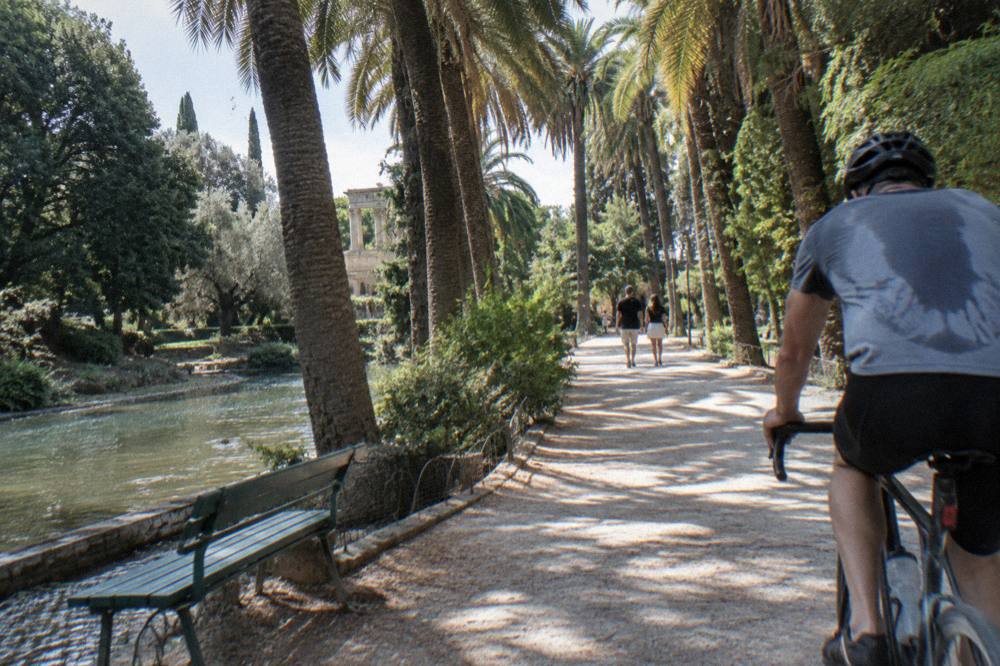
The 2025 Acropolis closures are the example that shows how this plays out in practice. When the Ministry of Culture shuts the city's main monument for four midday hours in a heatwave, a bike tour that planned to ride past it at 2 p.m. changes its route, and the operators that run sunset and night rides move their groups to the cooler hours. That is exactly why the Athens sunset ride exists on this site at 2 hours 30 minutes from $33.24 per person, and why the heat season from June to September belongs in any safety conversation about the city. The cycling in summer heat guide covers the practical habits, and the Athens weather by month page shows the numbers month by month.
| Month | Mean temperature | Rain days | What it means for a rider |
|---|---|---|---|
| July | 28.3 C | 1.7 | Ride mornings or evenings, carry water |
| August | 28.2 C | 1.6 | Peak heat, shade and timing matter |
| September | 24.3 C | 4.7 | Cooler but still summer rules |
| October | 19.6 C | 8.6 | Wet marble returns as the real hazard |
| November | 15.4 C | 10.9 | Mild, but rain-slick stone all month |
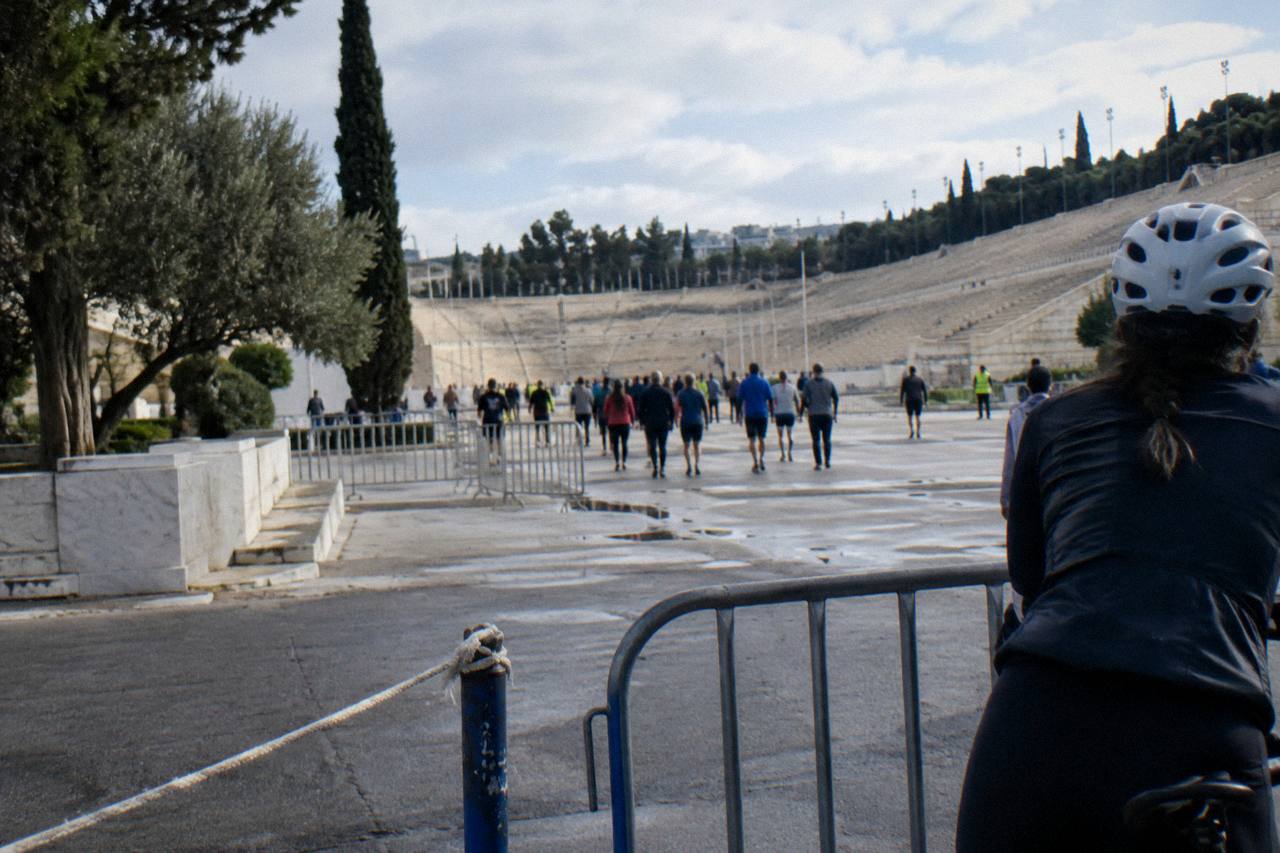
Timing also interacts with the city's event calendar. The 43rd Athens Authentic Marathon brings closures for all vehicles including bicycles: Irodou Attikou and part of Vas. Georgiou B from Thursday 5 to Monday 9 November 2026, with other streets such as Vas. Konstantinou, Arditou and Vas. Sofias closed in shorter windows over the race weekend, 6 to 8 November. A rider or a tour group that weekend should expect rerouted or rescheduled rides in the areas around the Panathenaic Stadium.
- Riviera And Coast Rides$28.66
- E-Bike Tours$33.24
- Sunset And Night Rides$33.24
- City And Acropolis Rides$40.12
- Private And Day Trips$61.90
Common Questions About Cycling Safely In Athens
Is Cycling In Athens Safe?
Yes, within limits. The road code is strict and published, the main physical hazards are polished marble and peak-hour traffic, and a guided group ride hands route choice and traffic calls to a local guide. No operator promises traffic, crowd or weather conditions, and none should.
Do You Have To Wear A Helmet In Athens?
No. For bicycles and e-bikes sold as bicycles a helmet is recommended, not mandatory, with no fine attached. The mandatory 30 EUR helmet rule applies to e-scooter-type light personal electric vehicles. Most guided tours on this site include a helmet in the price anyway.
Is It Safe To Cycle In Athens At Night?
It is legal and common, provided the bike carries the Article 80 lights and pedal reflectors and the rider skips headphones. Guided night rides from $51 to $54 per person provide the lights, the route and the group, which is the safer format for a visitor's first night ride.
What Is The Fine For Using A Phone While Cycling In Athens?
350 EUR for holding a phone or smartwatch-type device while riding, and the same 350 EUR for wearing headphones connected to an audio device. Most other minor cyclist violations, including riding two abreast, carry 30 EUR.
Are E-Bikes Safe On Athens Streets?
They are, and on the hills around the centre they are arguably safer than a regular bike, because pedal assistance keeps a rider from fatiguing into wobbly climbs. Every e-bike tour here runs on bikes sold as bicycles, so the helmet rule stays recommended, and group maximums run from 6 to 20 riders.
Is Athens Too Hot To Cycle In Summer?
July and August average 28.3 and 28.2 C at the Elliniko station with maxima near 32.2 C, and central Athens runs warmer. The pattern is real: the Ministry of Culture closed the Acropolis for midday hours during the July 2025 heat, and the tour roster here includes sunset and night rides among its options.
The three rides below cover the format spectrum, from a small group at $33.24 to a private guide at $80.23, and every one of them includes the bike, the guide and a helmet.