What Should You Not Do When Cycling In Athens?
The cycling mistakes visitors make in Athens, from sidewalk riding and phone use to heat and traffic, with the road code fines and habits that keep a ride safe.
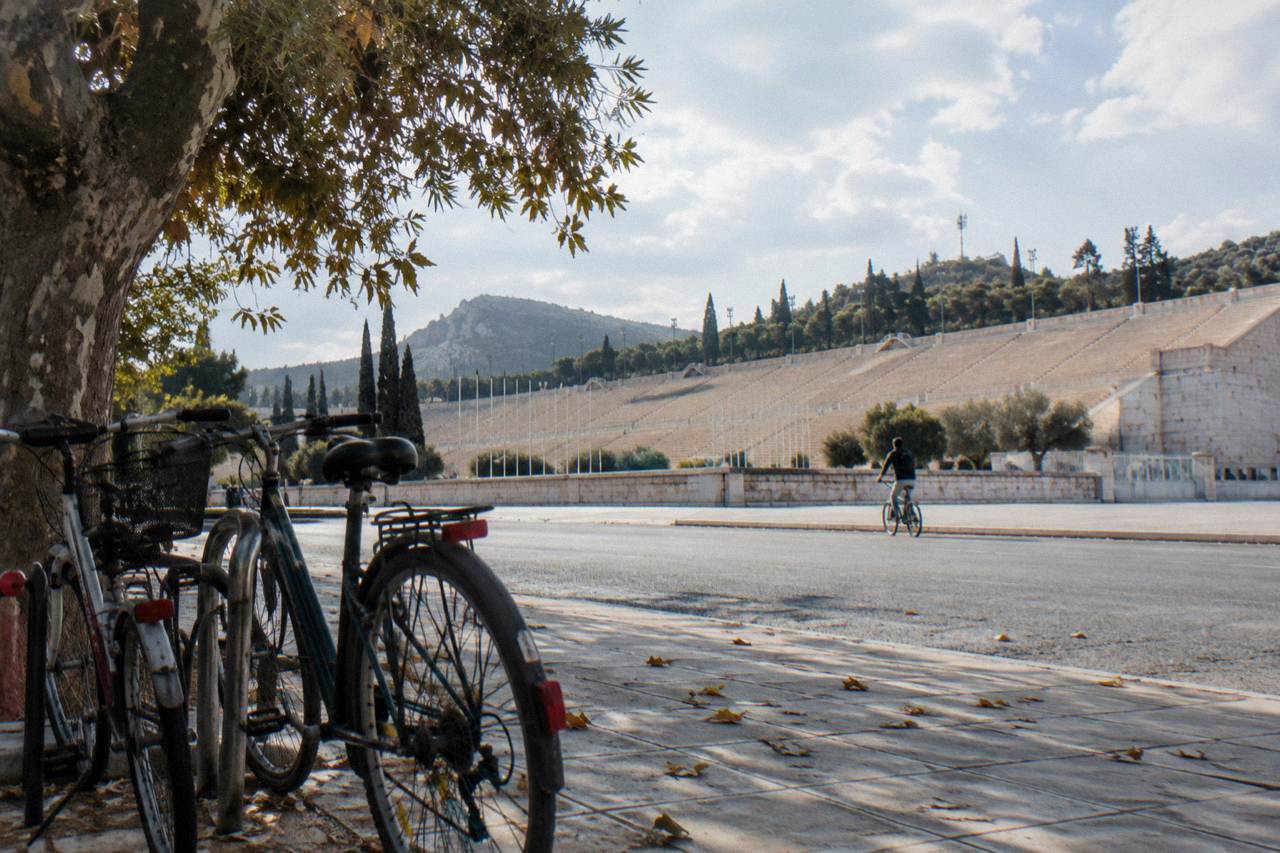
The mistakes that matter in Athens are mostly legal ones rather than fitness ones: riding two abreast, holding a phone or wearing headphones while pedalling, crossing against a bicycle signal, and rolling through pedestrian crowds on polished marble. The Greek road code, Law 5209/2025, sets fines from 30 EUR for small lapses to 350 EUR for a phone in the hand, and the summer heat adds a second layer of errors that no fine schedule lists.
The city is genuinely rideable. It is mostly flat in the center, the historic streets around the Acropolis and Plaka are easy to move through, and a guided ride of two and a half hours can cover more ground than a full day of walking. That is exactly why the mistakes pile up. Visitors arrive confident, rent a bike or join a tour, and within ten minutes they meet Athens traffic, its buses, its motorcycles, and its pedestrians.

Three categories of error are worth separating. The first is legal: breaking the rules of the road code, sometimes without knowing they exist. The second is behavioural, the habits of polite cycling in a busy Mediterranean city, dismounting when the pavement fills up, slowing near crowds, keeping the volume down. The third is planning, riding at noon in July, or setting off without water, or trying to see the Acropolis at the hour when the whole of Athens is doing the same thing.
This article walks through all three. It uses the road code itself, the Ministry of Infrastructure and Transport's published fine table, and the climate record, not guesswork, because the difference between a 30 EUR lapse and a 350 EUR one is worth knowing before the first pedal stroke. Where a mistake has no fine attached, the article says so plainly.
For many visitors, the cleanest way to avoid most of the errors below is to ride behind someone who makes a living dodging them. The most reviewed tour on the site, the Regular or E-Bike ride with optional Acropolis stop, exists for precisely that reason. A guide handles the road positioning, the timing, and the judgment calls, and the rider follows a wheel.
“We loved this tour! It gave us a great view of Athens and it was lovely to be outdoors and enjoying the sunshine and fresh air! Tour guide was super knowledgeable and we enjoyed it immensely!”
Which Cycling Mistakes Cost The Most Under Greek Law?
The two costliest habits are holding a phone or smartwatch while riding and wearing headphones, each carrying a 350 EUR fine in the Ministry's penalty table. Running a red bicycle signal sits between them at 150 EUR. Everything else on the common list, riding two abreast, taking a hand off the bars, skipping a hand signal, missing lights or reflectors, costs 30 EUR per violation.
The road code treats a cyclist's attention as the thing worth protecting. Article 44 of Law 5209/2025 bans hand-held phones and smartwatch-type devices outright while riding, and it bans headphones connected to audio devices, with one exception for open-air radio communication between riders. The law also requires both hands on the handlebar except when signalling, and it requires the signals themselves when the bike has no indicators.
| Mistake | Fine | Source in the code |
|---|---|---|
| Hand-held phone or smartwatch while riding | 350 EUR | Art. 44, Ministry table |
| Headphones connected to an audio device | 350 EUR | Art. 44, Ministry table |
| Running a red bicycle signal | 150 EUR | Art. 10, Ministry table |
| Riding two or more abreast | 30 EUR | Art. 44, Ministry table |
| One hand or no hands on the bars | 30 EUR | Art. 44, Ministry table |
| Missing a hand signal | 30 EUR | Art. 44, Ministry table |
| No lights or reflectors at night | 30 EUR | Art. 80, Ministry table |
| Endangering pedestrians without dismounting | 30 EUR | Art. 44, Ministry table |
The Ministry's published table of fines lists these amounts category by category, and it is the authoritative source for what a lapse actually costs. Note the pattern: the fines climb with distraction, not with speed. Nothing in the cyclist provisions penalises going fast for its own sake, but everything in them penalises a rider whose mind, ears, or hands are somewhere else.
There is also an alcohol rule, and it is broader than many visitors assume. There is no separate cyclist threshold. Article 46 sets impairment limits for every road vehicle, from 0.50 g/l in the blood or 0.25 mg/l in the breath, and a bicycle counts. The practical reading for a visitor is simple: the evening glass of wine belongs after the ride, not before it, and a bike is not a low-stakes way to end a night out.
Is Riding On The Sidewalk Allowed In Athens?
No general permission exists in the road code for cycling on the sidewalk. What the code does say, in Article 44, is that a cyclist who obstructs or endangers pedestrians must get off and walk, a rule backed by a 30 EUR fine. In central Athens that clause does most of the work: where the pavement is full, the correct move is to dismount, and the locals who glide through Plaka's crowds are breaking the rule, not interpreting it.
The same article adds a detail that surprises riders who have cycled in northern Europe. On cycle roads, pedestrians may use the full width and must give way to bicycles, and two-way cycling is allowed. The distinction matters because Athens has a patchwork of surfaces, dedicated lanes, shared paths, plain asphalt, and pedestrianised stretches, and the obligations change with each one. Where a cycle lane exists, Article 44 also says cyclists may not ride in the rest of the carriageway.
For a visitor, three practical habits fall out of this. Slow down when the street narrows near the Acropolis approaches and Plaka. Dismount where a crowd makes rolling forward a negotiation. And treat the pedestrianised heart of the city as shared space with a clear hierarchy: the pedestrian wins, the cyclist walks when the pedestrian's path is blocked.
None of this makes Athens hostile to bikes. It makes it a city where the written rule and the courteous behaviour point the same way, which is rarer than it sounds. A rider who follows the dismount clause avoids both the 30 EUR fine and the thing the fine exists to prevent, a collision with someone on foot.
What Do The Rules Say About Helmets, Phones And Riding At Night?
A helmet is recommended, not mandatory, for bicycle riders under Article 44 of the road code, including on e-bikes sold as bicycles. It becomes mandatory, with a 30 EUR fine, only for riders of EPMV light electric vehicles, the e-scooter type. At night the bike itself must carry one white or yellow front light, one red rear light or reflector, side reflectors, and pedal reflectors, again a 30 EUR category when missing.

The helmet nuance trips up a lot of writing about Greek cycling, so it deserves precision. The law text says bicycle drivers are recommended, not obliged, to wear an approved helmet. The obligation and the 30 EUR fine attach to the e-scooter class. Tour listings are stricter than the law: the majority of the rides on this site include a helmet in the price, and riders should take the free helmet every time one is offered. The law's minimum is not a target.
Night riding has its own short checklist. Article 80 of Law 5209/2025 sets the lighting requirements, with exemptions for small wheels, racing bikes, and mountain bikes that are not ridden at night. The mistake visitors actually make is assuming a rental bike is road-ready after dark. Check the front light, check the rear reflector, and if either is missing, ride in daylight or not at all.
The phone and headphone rules from the previous section deserve their second mention here because they are the ones people break by accident. A mounted phone in a cradle is one thing. A phone in the hand, glancing at a map at a junction, is the 350 EUR category, and it is also the single most common way a rider's attention leaves the road. Set the route before the ride starts, or stop somewhere safe to check it.
- Riviera And Coast Rides$28.66
- E-Bike Tours$33.24
- Sunset And Night Rides$33.24
- City And Acropolis Rides$40.12
- Private And Day Trips$61.90
Which Cycling Mistakes Do Tourists Make Around The Acropolis And Plaka?
The recurring ones are speed through crowds, wheels on polished marble, and assuming the slopes around the Acropolis are a through-route. Athens pavement is frequently smooth stone that turns slick when wet or worn, pedestrians move in unpredictable bursts near the viewpoints, and the road code's dismount clause, not rider confidence, sets the limit of where a bike belongs. The fix is slow, early, and by foot where the crowd thickens.
The historic center concentrates everything a cyclist should be careful of into a few square kilometres. Add tourist traffic, scooter traffic of both kinds, and bus routes feeding the sites, and the margin for error shrinks. The riders who look comfortable here are the ones riding slowly, signalling, and treating every junction as a negotiation rather than a right of way.
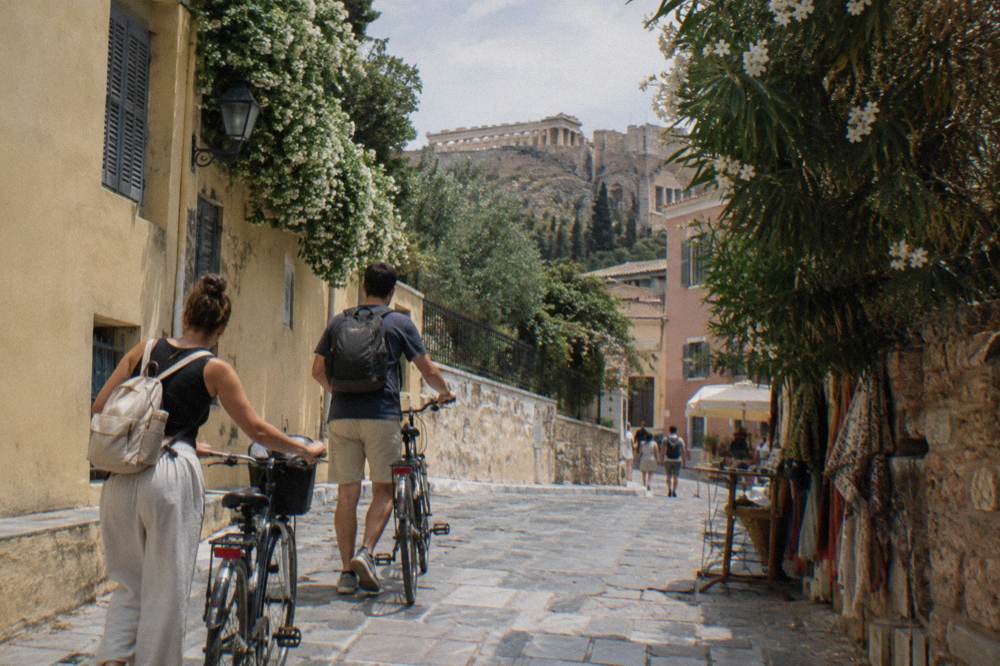
A few specific do-nots. Do not climb toward an archaeological entrance at pace with a group; the listings that include an Acropolis stop, such as the ride with tickets included, build in the walking sections precisely because wheels stop at the gates. Do not rely on memory for entry requirements; ticketing for the Acropolis runs through the official archaeological sites e-ticket page, and checking it directly beats any second-hand summary. And do not plan a midday Acropolis visit in July as a bike ride finale: the Ministry has shown it will close the site on hot afternoons, as it did from 1 p.m. to 5 p.m. on 8 and 9 July 2025 near 40 C.
The behavioural half of the list is shorter than the legal half but it does more work. Slow near crowds. Dismount when the street becomes a stream of people. Leave the headphones off, not only because of the 350 EUR category but because a city this dense rewards hearing it. The cycling rules in Greece guide covers the full code for riders who want the legal detail, and the is cycling in Athens safe guide addresses the traffic picture in depth.
Should You Ride On Your Own Or Book A Guided Athens Bike Tour?
Riding alone is legal and common, but a guided tour removes the three errors solo riders most often make: choosing a bad route through traffic, misjudging where to dismount, and timing the heat wrong. A guide also handles the road code in practice, positioning the group correctly at junctions and cycling in single file, which is the default in Athens traffic anyway since two abreast carries a 30 EUR fine.
The trade-off is not mainly about knowledge of the city, it is about bandwidth. A rider following a guide spends no attention on navigation, junction reading, or crowd prediction, and attention is the resource the road code fines people for lacking. The site's tour pages carry the specifics. Bike Tours Athens lists 31 rides across five categories, from city and Acropolis routes to Riviera coast rides and private day trips, nearly all of them guided; the live booking page states the exact inclusions for each.
| Option | Format | Duration | From price per person | Reviews |
|---|---|---|---|---|
| Regular or E-Bike, Optional Acropolis | Guided group, max 12 | 2 hours 30 minutes | $40.12 | 5.0 across 3,666 |
| Small Group, Optional Acropolis Stop | Guided small group, max 12 | 2 hours 30 minutes | $33.24 | 5.0 across 1,264 |
| Private Electric Bike, 3 Hours | Private, e-bike | 3 hours | $80.23 | 5.0 across 187 |
A small-group ride suits visitors who want the guide's road judgment at the lowest price. A private ride suits families, riders nervous in traffic, or anyone who wants the route shaped around them; the private tours listed are priced per person with the total depending on group size, so the booking page is the place to see the real figure for a given party.
The group maximum matters as much as the guide. Twelve riders in Athens traffic is manageable, and the listings that cap at six or eight tighten it further. What a solo rider loses is not the map, which any phone has, but the practiced eye for where the pavement turns slick, where a bus route crosses, and where the crowd ahead means feet on the ground.
Booking has its own small do-not: do not leave it to the last day. Free cancellation is standard across the tours listed, but the popular time slots, the sunset ones in particular, fill first, and a ride booked for the final morning leaves no slack if the weather turns.
“A perfect-in-every-way afternoon. Julian was top-tier as group leader. The route was great including quiet areas with lots of shade and just the right length for a lovely morning or afternoon or evening activity. Julian made sure everyone was enjoying themselves. A highlight of my short time in Athens.”
When Should You Not Cycle In Athens At All?
The two clear answers are the midday heat of July and August, and the marathon weekend. July and August average 28.3 and 28.2 C with maxima near 32.2 C and under two rain days, per the HNMS climate normals for the Elliniko coastal station, and central Athens runs warmer by day. On 7 and 8 November 2026 the Athens Authentic Marathon closes named central streets to all vehicles including bicycles.
The heat answer comes with a nuance: it is a timing problem, not a prohibition. The mistake is not riding in July, it is riding in July at 2 p.m. The Ministry's own behaviour shows what the risk looks like at the top of the thermometer: the Acropolis closed from 1 to 5 p.m. on two consecutive July afternoons in 2025 near 40 C. A cyclist should make the same call the site's managers make.
The marathon is a different shape of problem, a fixed calendar item. The 43rd edition runs on 7 and 8 November 2026, with races on both days and road closures on some streets from the Thursday through to Monday morning. A rider booked for that weekend should expect central stretches to be shut to bicycles, and the official marathon site carries the race schedule as the closures firm up.
Rain is the quieter variable. November and December are the wettest months in the climate record, at 60.1 mm over 10.9 rain days and 62.0 mm over 13.5 days respectively. Wet marble is the specific hazard, the polished pavements of the historic center lose grip fast, and the dismount clause earns its 30 EUR fine in exactly those conditions. Riders visiting from November through February should check the day's forecast and treat a wet forecast morning as a walking morning.
The last category of "do not" is logistical. Do not plan a self-guided ride that depends on carrying a bike on a bus, since buses take only folding bikes in a holder. Do not assume a metro trip is impossible; up to two bicycles ride in the last door of each train, with the elevators rather than the escalators, per the OASA passenger regulation. And do not arrive at a tour meeting point late: the rides listed start from fixed addresses in the Acropolis area, Koukaki, Thiseio, and the Syntagma centre, and none includes hotel pickup.
Common Questions About Cycling Mistakes In Athens
What Should You Not Do When Cycling In Athens?
Do not ride two abreast, hold a phone or smartwatch, wear headphones, cross against a bicycle signal, or keep rolling when pedestrians fill the pavement. The fines range from 30 EUR for the small lapses to 350 EUR for a phone in the hand, and the dismount rule applies wherever a crowd is endangered. Helmets are recommended rather than mandatory, and most listed tours include one, so check the booking page and wear it. The road code gives no general permission for sidewalk cycling. Article 44 instead requires a cyclist who obstructs or endangers pedestrians to get off and walk, with a 30 EUR fine attached. On pedestrian-heavy streets like those around Plaka and the Acropolis approaches, the practical rule is to dismount when the crowd thickens and treat the space as shared. For bicycle riders, including e-bikes sold as bicycles, a helmet is recommended, not mandatory, under Article 44 of Law 5209/2025. The mandatory helmet and its 30 EUR fine apply to EPMV riders, the e-scooter type. Most guided tours on this site include a helmet in the price regardless, and riders should use one. Hand-held phone or smartwatch use while riding carries a 350 EUR fine under the Ministry's penalty table, the same amount as riding with headphones connected to an audio device. The rule sits in Article 44 of Law 5209/2025. Mount the phone in a cradle or stop somewhere safe to check a map instead. Yes, with timing. July and August average 28.3 and 28.2 C with maxima near 32.2 C at the Elliniko coastal station, and central Athens runs warmer. Ride early or late, drink before setting off, and expect the Ministry to close the Acropolis on extreme afternoons, as it did on 8 and 9 July 2025. A sunset or night guided ride is the summer format most tours offer.Can You Ride A Bike On The Sidewalk In Athens?
Is A Helmet Mandatory For Bikes And E-Bikes In Greece?
What Happens If You Use Your Phone While Cycling In Athens?
Is It Safe To Cycle In Athens In Summer?