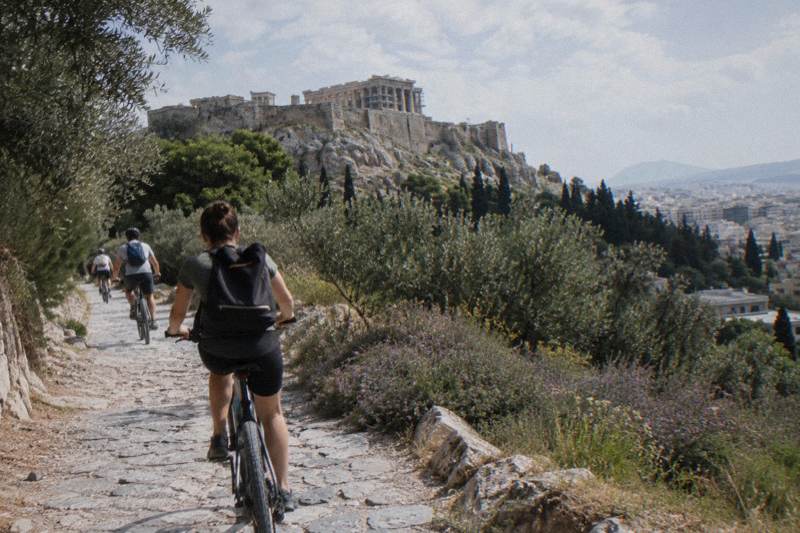
What To Wear On A Bike Tour In Athens
Athens is a hot, hilly, marble-paved city, and what you wear on the saddle decides whether the ride feels easy or miserable. Here is how to dress for a guided bike tour in Greece's capital, season by season.
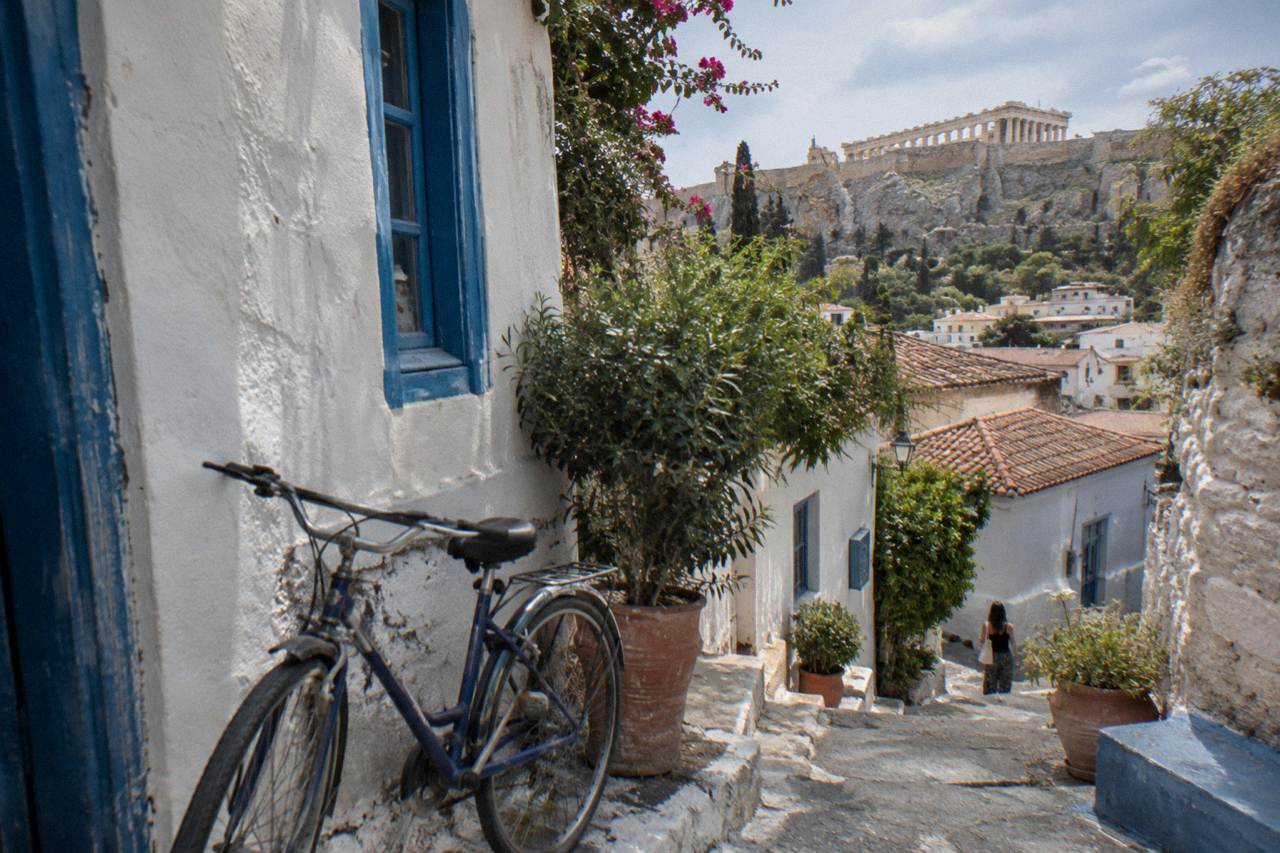
Short answer
Dress in light, breathable layers, wear closed shoes with grip, and bring sun protection. Athens averages 28 C in July and August, and its pavements are polished marble, so loose cotton or quick-dry clothing, sunglasses and a hat matter more than cycling kit. Tours supply the bike, and most supply a helmet, which Greek law recommends rather than requires for riders.
A bike tour in Athens is a street ride, not a mountain expedition, and the city's own conditions set the dress code. Daytime means heat, sun off pale buildings, and stretches of polished marble that turn slick underfoot when wet. Evening means a quick drop in temperature, especially from October onward. What you wear decides how much of that you notice.
The practical answer is simple: light layers, closed shoes with real grip, sunglasses, and something to cover your head. Almost everything else is refinement for the season. This page breaks the question down month by month, using official climate normals for Athens, and adds the pieces a first-time visitor rarely thinks about, from the helmet rule in Greek law to the afternoon closures that hit the Acropolis in heatwaves.
The tour you ride matters too. A 2 hour 30 minute city ride in July asks different things of your clothing than a 4 hour 30 minute coastal e-bike ride with a swim stop, and the tours covered here differ in exactly those ways. The most reviewed option, the Regular or E-Bike, Optional Acropolis ride from Athens by bike, runs 2 hours 30 minutes, is rated 5.0 across 3,666 reviews, and starts at from $40.12 per person, with the total depending on group size. It also lets each rider choose a regular bike or an e-bike at booking, which changes how much you sweat.
What Should You Wear On A Bike Tour In Athens?
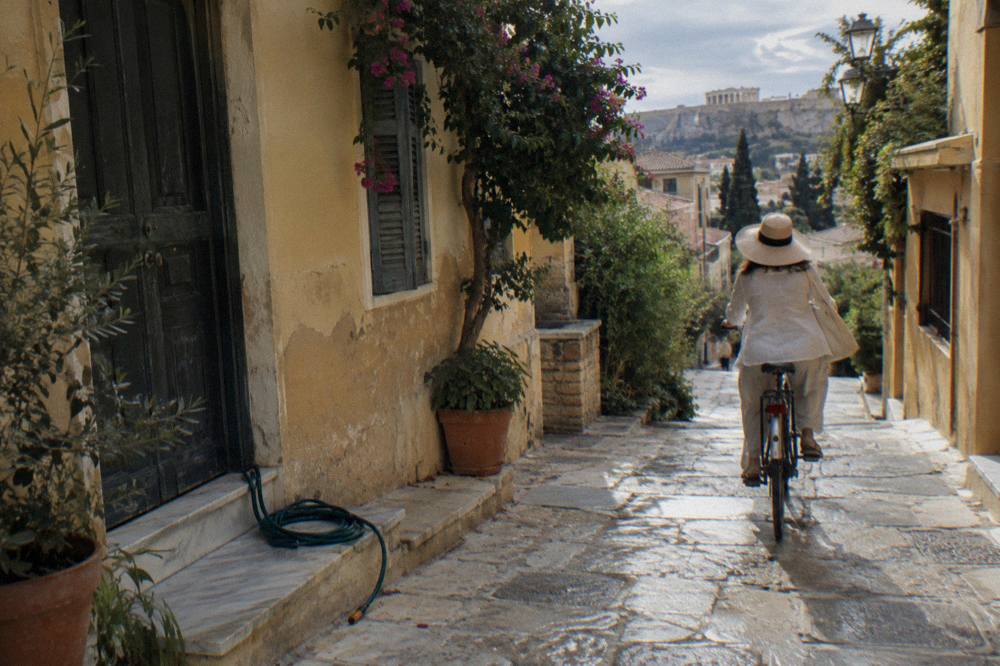
Wear light, breathable clothing in layers, closed walking shoes with decent tread, sunglasses and a hat or cap, and skip anything loose that can catch in the chain. Athens rides happen on city streets at a touring pace, not at racing speed, so ordinary summer travel clothes work well, with one adjustment: choose fabrics that survive two and a half hours in the sun.
The core wardrobe for an Athens ride barely changes across the year, only its weight does. Shorts or trousers that let the knee bend freely, a top that covers the shoulders in high summer, and a light layer for the start or the end of the ride. Skirts and dresses work on a step-through frame, which most rental and tour bikes in the city are, but flowy hems near a chain deserve a thought.
Colors matter more here than most visitors expect. Dark tops in July absorb heat fast, and Athens pavement radiates the day's warmth back up well into the evening. Lighter colors also show less dust, which the city generates plenty of in the dry months. Avoid brand-new shoes: the first hour of marble and cobbled slopes is not a good breaking-in lap.

One planning point on Bike Tours Athens: nearly all guided rides in the city start at a fixed meeting point, most of them in the Koukaki, Makrygianni or Thiseio area near the Acropolis, rather than at your hotel. Nobody comes to pick you up unless the listing explicitly says so, which means your clothing decisions start with a walk or a metro ride to the meeting point. For how that transport side works, see the Athens metro guide for visitors and the guide to where Athens bike tours start.
How Does The Season Change What To Wear In Athens?
In summer, June through August, wear as little as decency and sun protection allow, plus a cover-up: mean temperatures sit at 28.3 C in July and 28.2 C in August. From October to March, layers do the work, with November and December the wettest months, 60.1 mm and 62.0 mm of rain respectively, so a packable rain layer earns its place.
The numbers come from the HNMS climate normals for the Elliniko coastal station, the official long-run record for Athens, and they should be read with one correction: Elliniko is coastal, and central Athens runs warmer by day. The table below is the layering calendar in plain form.
| Months | Typical daytime feel | What to wear | Extra to carry |
|---|---|---|---|
| Dec to Feb | Mean 10.3 to 11.9 C, cool starts | Trousers, warm top, light jacket | Gloves, warm layer for evening |
| Mar to May | Mean 12.4 to 20.9 C, warming fast | Layers, light trousers or shorts from May | Warm top to shed, light rain layer in March |
| Jun to Aug | Mean 25.6 to 28.3 C, hot afternoons | Loose, light, covering the shoulders | Sun hat, high-SPF sunscreen, extra water |
| Sep to Nov | Mean 15.4 to 24.3 C, cooling and wetter | Layers again, light jacket | Rain layer from October, warm top for stops |
The seasonal logic for tour clothing follows directly from those numbers. A spring ride in March still wants a jacket for the first hour and the last. By May the problem flips: the mornings are gentle and the midday sun is not, so the planning question becomes start time rather than warmth. July and August are the months when the whole ride, not just the summit photo, happens in heat, which is when fabric choice stops being cosmetic.
There is one summer wrinkle worth knowing before you plan clothing around a midday or afternoon start. The Ministry of Culture closed the Acropolis from 1 p.m. to 5 p.m. on 8 and 9 July 2025, when temperatures approached 40 C, a pattern reported at the time, and tour operators in Athens respond to such heat by leaning on morning and evening departures. A sunset ride exists on the city's books for exactly that reason: the Sunset Ride, Regular or E-Bike from Athens by bike runs 2 hours 30 minutes, starts at from $33.24 per person, is rated 5.0 across 169 reviews, and that price is tied for the lowest from-price among well-reviewed Athens tours, matching the Small Group E-Bike Tour from the same operator. For the fuller picture of month-by-month conditions, the Athens weather by month guide carries the same verified climate table in more detail.
A note on the autumn shoulder, since it surprises people. October looks warm on paper, with a mean of 19.6 C, but it also averages 8.6 rain days in the month and 45.9 mm of precipitation, which on marble means slick surfaces. A packable rain shell weighs little and does double duty as a wind layer on the descents. Nobody needs Gore-Tex footwear in Athens, but nobody needs soaked jeans either.
Which Shoes Work Best On Athens Streets?
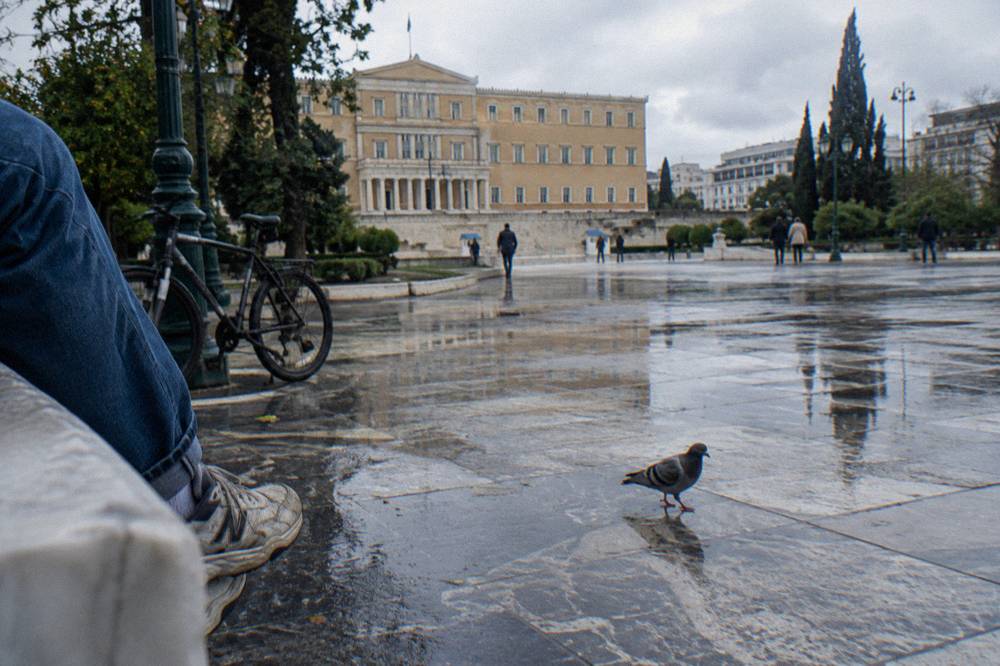
Wear closed shoes with a flexible sole and some tread, such as trainers or light hiking shoes. Athens pavements are largely polished marble and smooth flagstones, which get slippery when wet or dusty, and bike pedals on city tours are flat, not clip-in, so ordinary trainers are the right tool, with sandals acceptable in high summer only if they stay firmly on the foot.
The shoe question is really a grip question. Two surfaces dominate central Athens: marble, which is beautiful, cool and treacherous, especially after rain or with fine summer dust on it, and cobbles, which punish thin soles over a couple of hours. A shoe with a soft, patterned sole handles both. Flip-flops belong on the beach at Voula or Glyfada after the ride, not on it.
Socks deserve one sentence of their own. In summer heat, thin socks prevent the pedal and the shoe from becoming a single warm damp environment, and in the wet months they are the difference between a sprinting stop and a squelching one. That is the entire depth of the topic.
If your plans run longer than the standard city circuit, choose shoes accordingly. The City to Sea E-Bike, Pastry Tasting tour from Athens by bike runs 4 hours 30 minutes, includes a pastry tasting, is rated 4.9 across 273 reviews and starts at from $51.58 per person, and its seaside leg means shoes that can handle both street riding and a beach stop make sense. The Suncycling Athens coastal ride with a swimming stop, 3 hours 30 minutes at from $56.16 per person and rated 4.9 across 49 reviews, makes the same argument more strongly: whatever you wear will meet sand.
The tour format drives the clothing question more than most riders expect before booking, and the pattern holds across the whole spectrum of Athens rides. The table below matches each tour format to what it asks of your wardrobe and your kit, using the durations and inclusions from the tour listings themselves.
| Tour format | Duration | What it asks of your clothing | Kit notes from the listing |
|---|---|---|---|
| City highlights ride | 2 to 3 hours | Standard street kit, sun protection in summer | Helmet included, bike included |
| Sunset ride | 2 hours 30 minutes | Light layer to shed, sunglasses for low sun | Helmet included, free cancellation |
| Coastal ride with swim stop | 3 to 4.5 hours | Shoes that dry, swimwear under riding clothes | Bring a towel, drinks not included |
| Acropolis option ride | 2.5 to 4.5 hours | Modest layer for walking inside the site | Ticket included only on the tickets-included listing |
| Private e-bike ride | 2 to 3.5 hours | Dress for your own pace, not a group pace | Bottled water on some listings |
For the purely urban ride, the rule holds at every price point. The Neighborhood Ride from Suncycling Athens, 2 hours 30 minutes at from $40.12 per person and rated 4.9 across 131 reviews, and the 3-Hour Ride with Light Refreshments from Let's meet in Athens, rated 4.9 across 906 reviews at from $45.28 per person, both run the same marble-and-cobble mix as everything else in the centre. Any closed shoe that walks well rides well.
Do You Need A Helmet On An Athens Bike Tour?
Greek law recommends, but does not require, a helmet for bicycle riders, including e-bikes classified as bicycles, under Article 44 of the road code published in the Government Gazette on 13 June 2025, so wearing one on tour is a personal choice. Most Athens tours supply a helmet anyway, per the individual tour flags, so you rarely need to pack your own.
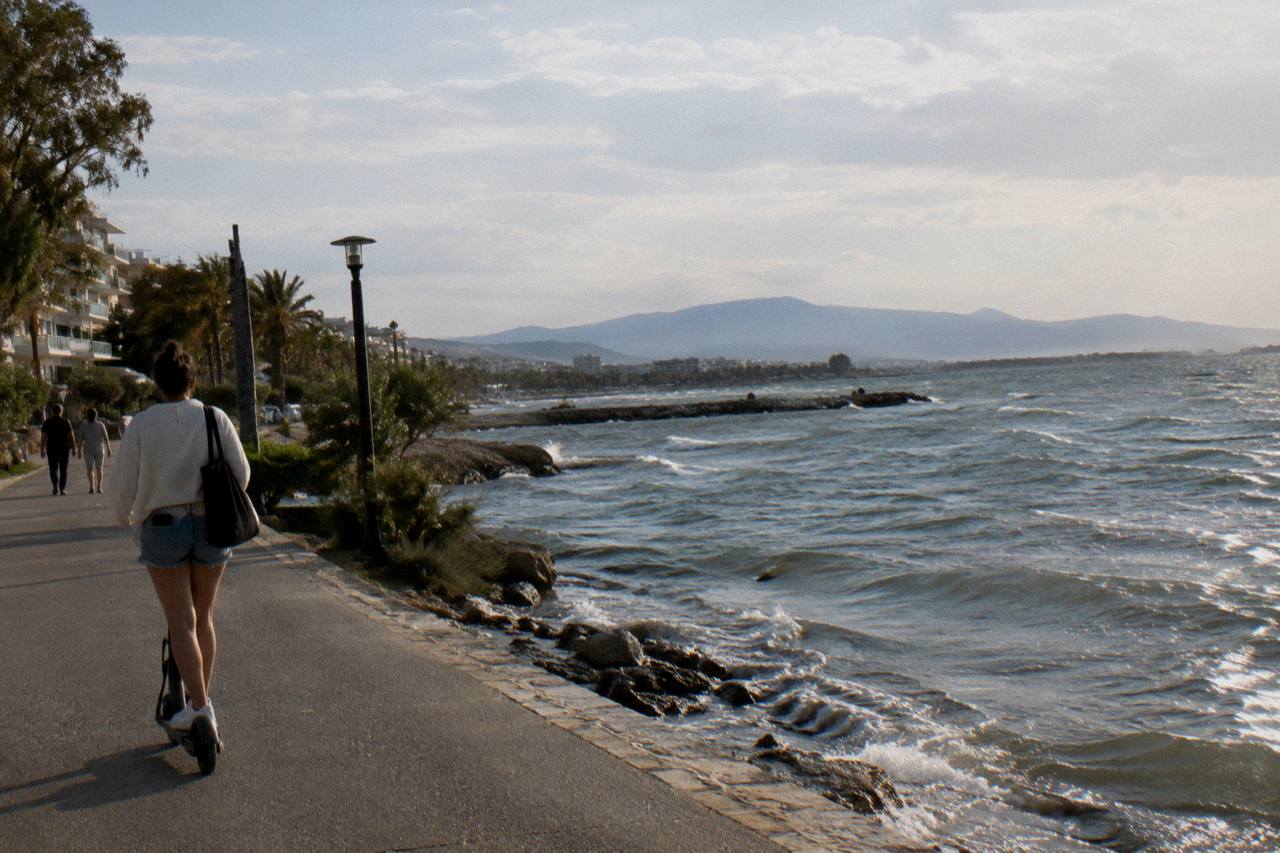
The distinction matters and is often garbled in travel advice. The mandatory-helmet rule in Greek law applies to riders of EPMVs, the light personal electric vehicles of the e-scooter type, where riding without one carries a 30 EUR fine under the Ministry's published penalty table. For bicycle riders, including pedelec e-bikes, the word in Article 44 of the road code is a recommendation. Tour operators sit somewhere between law and practice: nearly every ride on the Athens books lists a helmet as included, though a handful of listings leave the flag silent, and a silent flag means you should ask before assuming.
Helmets and hair deserve a practical note. A tour helmet worn for 2 hours 30 minutes over freshly styled hair in July is a social problem, not a safety one, and the usual local answer is to ride with a cap under the helmet or simply to bring a hair tie. Nobody on an Athens tour arrives in racing kit, and nobody should feel pressure to.
The same law that governs helmets governs a few clothing-adjacent behaviours worth knowing on a city ride. Riding two abreast is prohibited, holding a phone or smartwatch in hand while riding carries a 350 EUR fine, and so does wearing headphones connected to any audio device, per the Ministry's penalty table. All of which points one way: shorts and sunglasses are your wardrobe, and ears uncovered and hands free are your riding style. The cycling rules in Greece guide covers the rest of the code.
What Sun Protection Should You Bring For Summer Riding?
Bring sunglasses, a hat or cap that fits under a helmet, high-SPF sunscreen applied before the start, and a bottle or two of water, because July and August average 32.2 C daily maxima at the official coastal station, and central Athens runs warmer. Loose, light clothing that covers the shoulders protects better than bare skin plus sunscreen alone, and most summer rides lean morning or evening for exactly this reason.
Athens sun in the warm half of the year is not a gentle Mediterranean glow, it is direct, close to 40 degrees of it in the afternoon, and reflected off stone. Sunglasses matter more than visitors expect because the glare is doubled by pavement. A cap with a brim keeps the sun off the scalp during stops, and the cycling in Athens summer heat guide goes deeper on timing and hydration strategy.
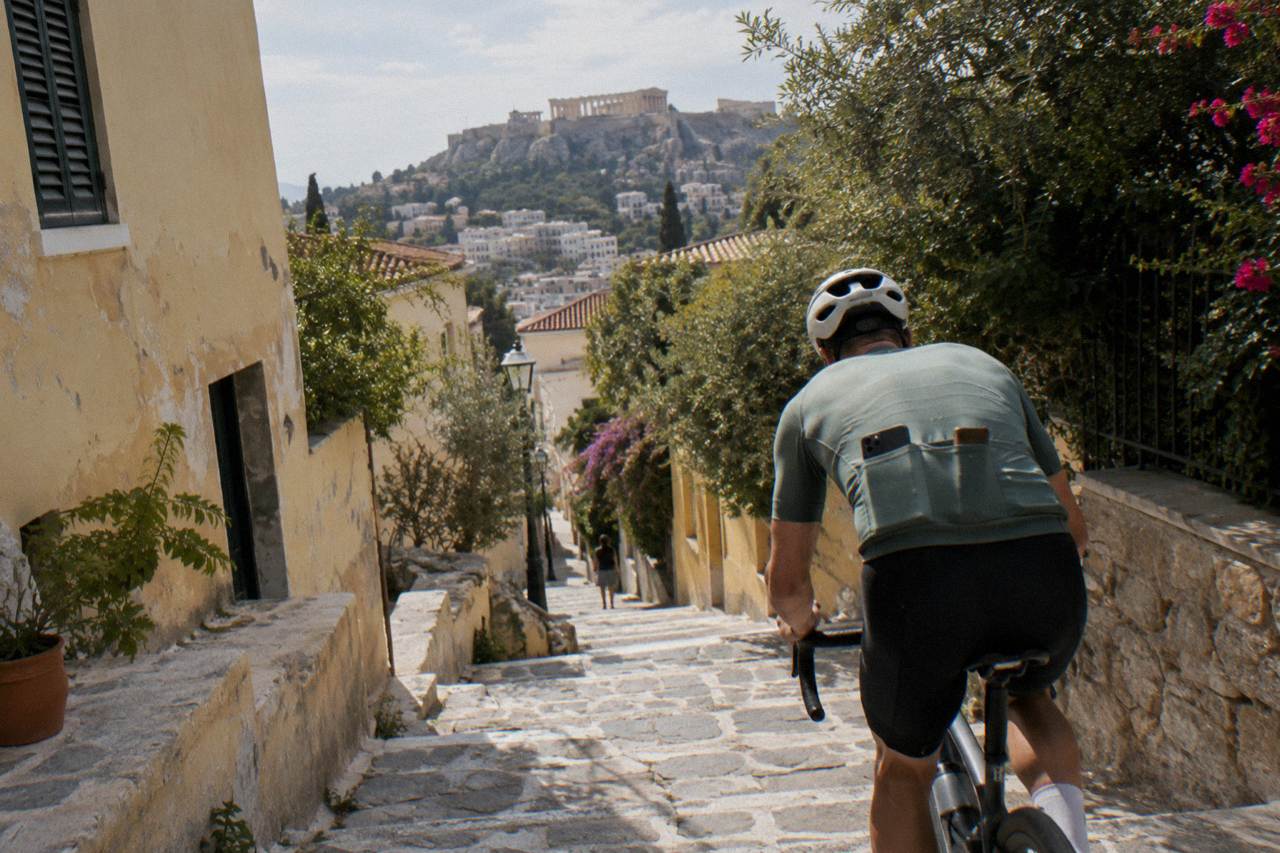
Sunscreen has a practical tour problem: hands. On a city ride you are gripping a handlebar and occasionally signalling, and re-applying cream mid-ride means greasy palms on grips. The workable pattern is a thorough application before the start, ideally a sports formulation that does not run with sweat, and a second application at a stop. Sleeve coverage, a light long-sleeve top in technical fabric, outperforms repeated cream application in the hottest hours and costs nothing in comfort at touring pace.
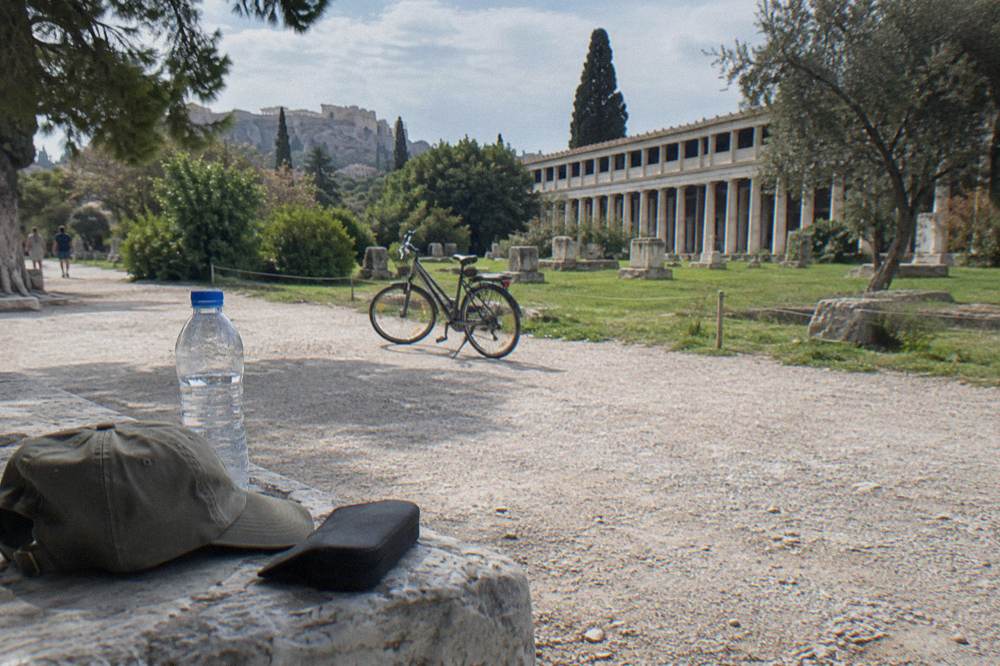
Water logistics depend on the tour. Some listings include drinks, such as the 3-Hour Ride with Light Refreshments, where refreshments are part of the package, or the Private Ride, Wine or Ouzo Included from We Bike Athens, a 3 hour 30 minute private e-bike tour at from $103.16 per person, rated 5.0 across 21 reviews, where drinks are included and the total depends on group size. Others list drinks or food as not included, and then your own bottle is part of your kit, not an optional extra. Check the inclusions line on the booking page before you ride.
What Should You Pack For A Morning Or Sunset Ride?
Pack one warm layer you can shed and stash, plus a light for the road if you ride after dark, because Athens evenings drop faster than visitors expect, and after sunset lights are a legal requirement for bicycles: one white or yellow front light and one red rear light or reflector are required night equipment under Article 80 of the road code, with a 30 EUR penalty class for violations.
The evening drop is real even in the hot months. Athens means fall from around 28 C in August to evenings that feel ten degrees cooler once the stone stops holding heat, and in the shoulder seasons a ride that starts warm can end with a cold headwind off the sea. A tied-around-waist layer is the classic answer and it still is.
The light question, though, is a legal one, not a comfort one. Article 80 of the road code sets out the night equipment for bicycles, and touring with a guide after dark still counts as riding at night. Tour bikes in Athens generally come equipped, and the guide handles the route, but knowing the rule tells you what to look for at the pre-ride check. There are dedicated evening options: the 2-Hour Night Highlights E-Bike from We Bike Athens, rated 4.9 across 580 reviews at from $54 per person, and the Night Ride, Greek Treat Included from electricityrides, rated 4.8 across 105 reviews at from $51 per person, both run after sunset, and the Athens night bike tour guide and the Athens after dark guide cover the fuller picture.
A pocket checklist that fits every evening ride in the city:
| Item | Why it belongs on an evening ride | Notes |
|---|---|---|
| Warm layer | Evening temperature drop, sea breeze | Anything you can tie to the waist |
| Sunglasses | Low sun on west-facing streets | Standard pair, nothing special |
| Water bottle | Drinking fountains are scarce en route | Some tours include bottled water, some do not |
| Small light or reflective item | Night equipment rules under Article 80 | Tour bikes usually come equipped |
| Hair tie or cap | Helmet comfort on a long evening | Optional, purely practical |
One November-specific note, since this is written in November 2026: the Athens Authentic Marathon weekend falls on 7 and 8 November 2026, and the closure decree bans all vehicles, explicitly including bicycles, from Irodou Attikou and Vas. Georgiou B from Thursday 5 November 08:00 to Monday 9 November 08:00, with separate windows for other streets such as Vas. Konstantinou, Arditou and Vas. Sofias. If your ride falls on that weekend, expect rerouted or rescheduled departures, and dress for standing around in autumn weather as much as for riding in it. The official event site carries the race-day details.
Should You Dress Differently For An E-Bike Tour In Athens?
Not really: e-bike tours use the same clothing logic as regular-bike tours, with two adjustments, more attention to wind on faster open stretches, and less need for sweat-wicking kit, since the motor flattens the hills that make Athens riders perspire. The choice between bike types is made at booking on tours that offer it, and most tours in the city are e-bike-only, so ordinary touring clothes are the norm either way.
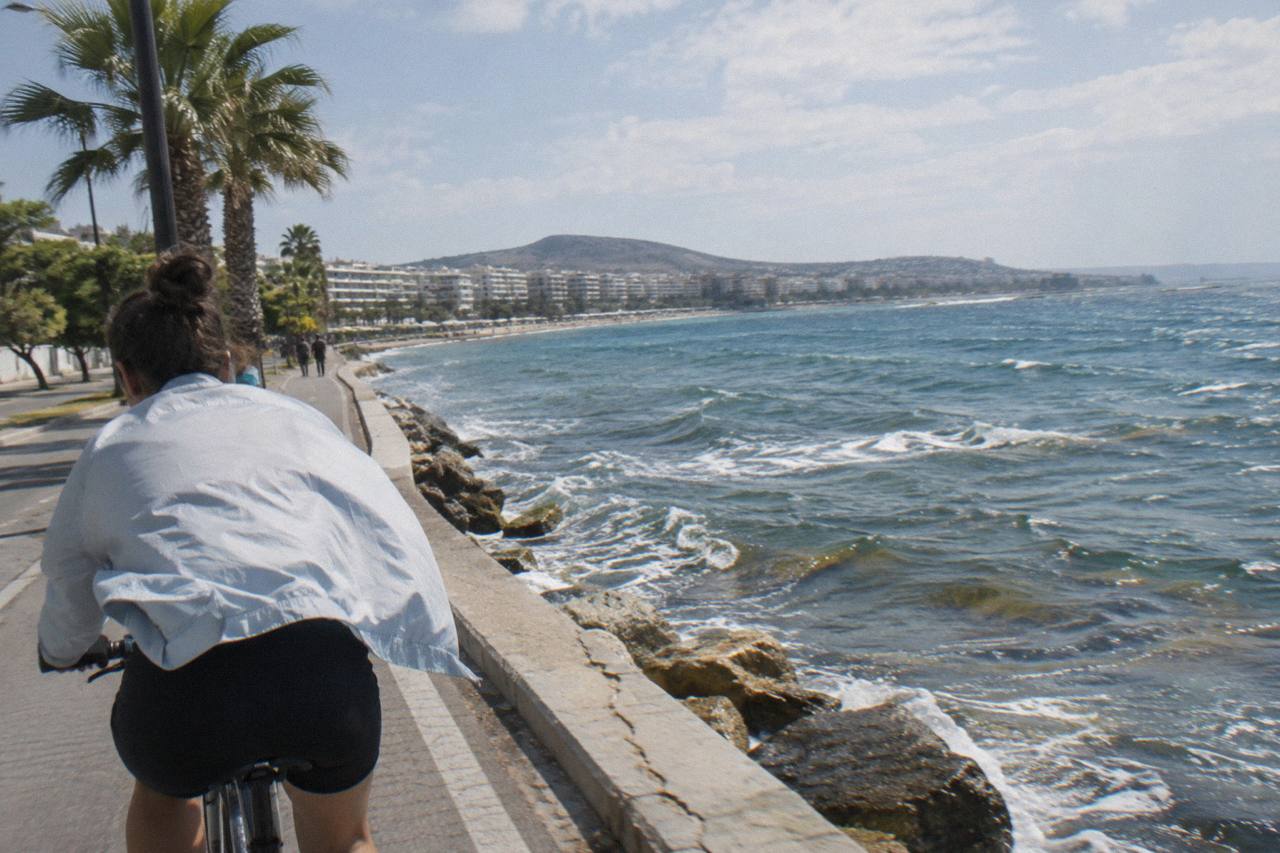
The physics is straightforward. Regular bikes on Athens slopes, and the city has real climbs on its flank at Philopappos and toward Lycabettus, produce sustained effort and with it sweat. An e-bike at the same touring pace mostly does not, which in July is the difference between arriving at a photo stop presentable and arriving wrung out. That makes the e-bike a clothing decision as much as a fitness one. The electric bike versus regular bike comparison weighs them properly.
A good example of the format is the E-Bike Hidden Gems and Highlights tour from BlueBike, 3 hours at from $38 per person, rated 5.0 across 56 reviews, which covers the same central terrain a regular-bike tour does but with the assist. At the other end of the range, the E-Bike Tour, Acropolis Tickets Included from Athens by bike runs 4 hours 30 minutes at from $79.09 per person, rated 5.0 across 741 reviews, with tickets included in the price as the listing states, so the wardrobe question there includes what you wear for a walking visit inside the site as well as for the ride. The Acropolis bike tour page covers that ride type in full.
For private rides the same clothing logic applies with more freedom. The Private E-Bike, 2 Hours 30 Minutes from We Bike Athens, at from $85.97 per person with the total depending on group size and rated 5.0 across 69 reviews, and the Private Electric Bike, 3 Hours from Athens by bike, at from $80.23 per person with the same group-size caveat, rated 5.0 across 187 reviews, both let you set the pace, which in practice means you set how much you sweat. The private bike tour guide covers that whole category.
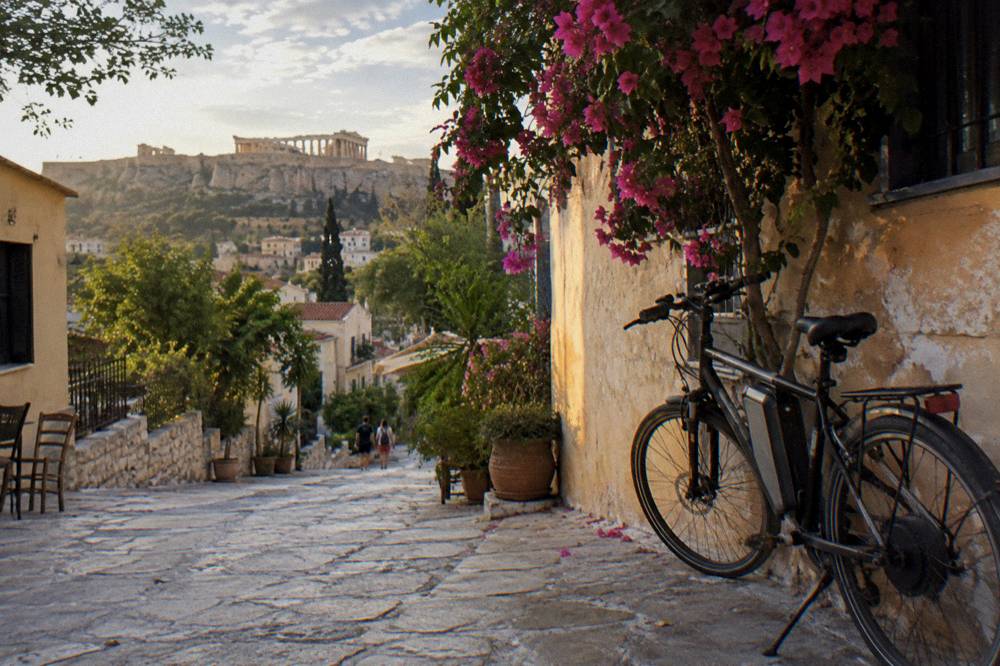
One closing thought on luggage. None of this needs special clothing purchase, and the packing question is really about what to leave at the hotel. The rule that holds for every Athens tour: bring only what fits in two pockets, a phone, a card, sunscreen, and let the bike carry the rest. The what to bring on an Athens bike tour guide extends the same logic to everything else in your daypack.
Common Questions About What To Wear On A Bike Tour In Athens
Can You Wear Sandals On An Athens Bike Tour?
You can, but it is a poor choice. Athens surfaces are polished marble and smooth stone that turn slick with dust or rain, and sandals offer no protection from a pedal or a kerb edge. Closed trainers or light hiking shoes are the comfortable answer on every tour type in the city.
Do You Need Special Cycling Clothes For A Guided Tour?
No. Athens tours ride at a sightseeing pace on flat-pedal city bikes, so ordinary travel clothing in breathable fabric is standard kit. Racing shorts and clip-in shoes are out of place, and the most reviewed tour in the city, a 2 hour 30 minute ride rated 5.0 across 3,666 reviews, attracts exactly that dressed-down crowd.
Should You Bring Your Own Helmet?
Only if you prefer your own fit. Greek law recommends rather than requires a helmet for bicycle riders, and most Athens tours list a helmet as included, so the operator's helmet covers you. Where a tour's listing does not mention a helmet, ask before booking rather than assuming.
What Do You Wear On A Sunset Or Night Ride?
The same as a daytime ride plus one warm layer for the drop after dark, and sunglasses that come off when the sun does. Bicycles ridden at night need a white or yellow front light and a red rear light or reflector under Article 80 of the road code, and tour bikes are generally equipped, but it is worth checking at the start.
How Cold Does A Winter Ride In Athens Get?
Mild by northern European standards: December averages a mean of 11.9 C and January 10.3 C, with daytime maxima near 15 C. A warm top, a light jacket and full-length trousers cover almost every winter ride, with rain the bigger planning issue than cold, since December averages 62.0 mm of precipitation across 13.5 rain days.
Does An E-Bike Tour Change What You Wear?
Barely. The motor flattens Athens's slopes, so you sweat less and can dress for the weather rather than for exercise. Everything else, shoes, sun protection, layers, stays the same, and on tours that offer a choice of bike types you pick at booking anyway.