Is Athens Too Hot To Visit In August?
Athens in August averages 28.2 C with highs near 32.2 C at the official coastal station. Here is what that heat means for visitors, and how to plan a bike ride around it.
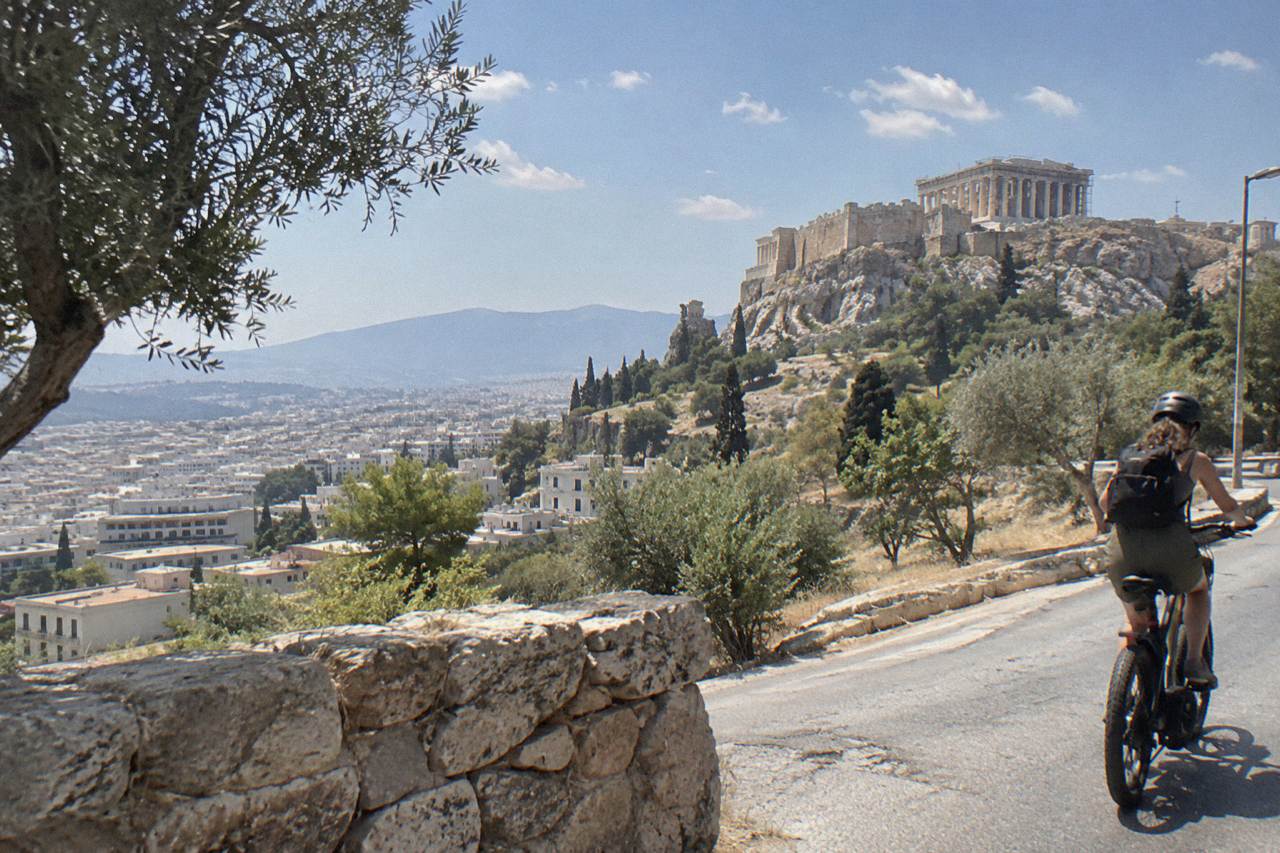
No, Athens is not too hot to visit in August, but the midday hours are genuinely difficult and the visit needs planning around them. The official climate normals for the Elliniko coastal station put August at a mean of 28.2 C with maxima near 32.2 C, and central Athens runs warmer by day. The reliable pattern is simple: mornings and evenings are pleasant, afternoons are not.
The question deserves a straight answer rather than a shrug, because August is the month when the fear of Greek heat keeps a lot of people away from a city that is otherwise at its calmest. Many locals leave Athens for their own holidays in August, and the city settles into a slower summer rhythm that visitors can use to their advantage. What the month demands is honesty about the middle of the day.
That honesty starts with the actual numbers. The official climate record for the Elliniko station, kept by the Hellenic National Meteorological Service and based on the 1955 to 2010 observation period, gives August a mean of 28.2 C, a mean maximum of 32.2 C, and a mean minimum of 23.1 C. Rain is close to irrelevant: 6.2 mm across the month, spread over roughly 1.6 rain days. The nights barely cool below 23 C, which is the detail that actually shapes a visit, because a city that stays warm at 10 p.m. is a city that rewards evening plans.

The heat also has a documented edge case that matters to anyone booking a summer itinerary. During a stretch of weather near 40 C, the Ministry of Culture closed the Acropolis from 1 p.m. to 5 p.m. for two consecutive July afternoons, with outdoor manual work stopped in the hottest regions. That is one verified instance, not a standing rule, but it shows how the authorities themselves treat the early afternoon in a heat peak: as hours to avoid rather than endure.
For a cyclist, or anyone considering a guided ride, the August answer is even easier to give. A moving rider with a breeze feels very different from a standing pedestrian in full sun, and several Athens tours lean into this by riding at sunset or after dark. The most reviewed ride covered here, the Regular or E-Bike, Optional Acropolis tour from $40.12 per person, rated 5.0 across 3,666 reviews, runs 2 hours 30 minutes with a rider's choice of regular bike or e-bike, a helmet included, and free cancellation per the listing. Evening and sunset versions of the same routes exist, and one coastal option even builds in a swimming stop.
The rest of this article looks at what the heat actually is, hour by hour, and how to fit a ride into the parts of the day that work.
How Hot Does Athens Actually Get In August?
August in Athens averages 28.2 C on the official coastal record, with a mean maximum of 32.2 C and a mean minimum of 23.1 C, plus only about 6.2 mm of rain all month. Central Athens runs warmer by day than the coastal station, and in July 2025 the heat hovered near 40 C. July is nearly identical at 28.3 C, so August is a continuation of the same heat rather than a new spike.
The figures come from the Hellenic National Meteorological Service normals for the Elliniko station, the standard long-period observation point for Athens, archived official climate data that the service no longer serves at its old live address. Elliniko is coastal, so its readings are the mild version of the city. Inland, among the apartment blocks of the centre, the daytime air runs a few degrees warmer, the asphalt holds that heat after sunset, and the felt temperature at 3 p.m. in the shade of a Plaka alley has little to do with a monthly mean.
Here is how August sits inside the year, using the same station's numbers:
| Month | Mean C | Mean max C | Mean min C | Rain mm | Rain days |
|---|---|---|---|---|---|
| May | 20.9 | 24.4 | 15.8 | 14.3 | 6.4 |
| June | 25.6 | 29.2 | 20.3 | 5.4 | 3.6 |
| July | 28.3 | 32.2 | 23.0 | 6.3 | 1.7 |
| August | 28.2 | 32.2 | 23.1 | 6.2 | 1.6 |
| September | 24.3 | 28.3 | 19.6 | 12.3 | 4.7 |
| October | 19.6 | 23.4 | 15.7 | 45.9 | 8.6 |
Read that table twice and the August story changes shape. The month is dry, bordering on rain-free: 6.2 mm is a single passing shower for most northern European cities, and 1.6 rain days means a wet afternoon is genuinely unusual. Nobody visiting Athens in August loses days to weather. The trade is that the sky is almost always clear, the sun is high and strong for most of the waking day, and the mean minimum of 23.1 C means the city does not refresh overnight the way a visitor from a northern climate expects.
Two practical consequences follow. First, September is the escape valve: a month later the November mean sits at 15.4°C, autumn rain has not yet arrived at its November-December peak, and the summer heat that often exceeds 35°C has passed, which makes September one of the best months for cycling in Athens. Second, within August itself, the difference between the coolest and hottest hours of the day is far larger than the difference between August and its neighbouring months. A 7 a.m. start and a 7 p.m. start happen in what feels like a different city from 2 p.m.
- Riviera And Coast Rides$28.66
- E-Bike Tours$33.24
- Sunset And Night Rides$33.24
- City And Acropolis Rides$40.12
- Private And Day Trips$61.90
Extreme peaks are real, and one deserves its place in any honest account. In the documented heat case, temperatures near 40 C pushed the Ministry of Culture to close the Acropolis during the early afternoon of two consecutive days, a decision reported at the time as a heatwave measure. That happened in July, not August, and it is a single documented instance rather than a pattern, but it illustrates the honest ceiling of the conversation: when an actual heat peak arrives, the authorities pull the site, the tours shift earlier, and a rigid midday itinerary collapses. A flexible one does not.
What Does August Heat Do To A Rider?
It converts a sightseeing ride into a scheduling problem. With a mean maximum near 32.2 C, and the city centre running warmer, the workable window for pedalling is roughly before 11 a.m. and after 6 p.m. Inside that window riding is pleasant, outside it the heat is hard work, and the road code itself recognizes that cyclists must sometimes adjust behaviour to conditions.
Riding a bike in heat is not the same activity as walking in it, and that cuts both ways. On the move, the airflow across a rider's skin makes 30 C feel markedly better than it does standing still, which is why a hot city can still be a pleasant cycling city. Stop at a viewpoint, though, and the breeze stops too, and a rider who was comfortable in motion is suddenly a person standing under an August sun in a black helmet. Guided rides handle this with structure: regular stops in shade, water carried on the bike or in a basket, and routes that lean on tree-lined streets and slopes rather than open asphalt.
The road code is worth a rider's attention here, because Greek cycling law changed recently and it shapes how a summer ride actually feels. Under Article 44 of the road code, a helmet is recommended, not mandatory, for bicycle riders, so the helmet decision on a 32.2 C afternoon is a comfort trade the rider makes personally. The same article bans riding two abreast, holding a phone or a smartwatch in hand, and riding with headphones, and it requires cyclists to dismount and walk where they obstruct or endanger pedestrians, which in August means the crowded pavement edges near Plaka and the Acropolis approaches. None of that is heat-specific, but every one of those rules bites hardest exactly where the August crowds and the August sun overlap.
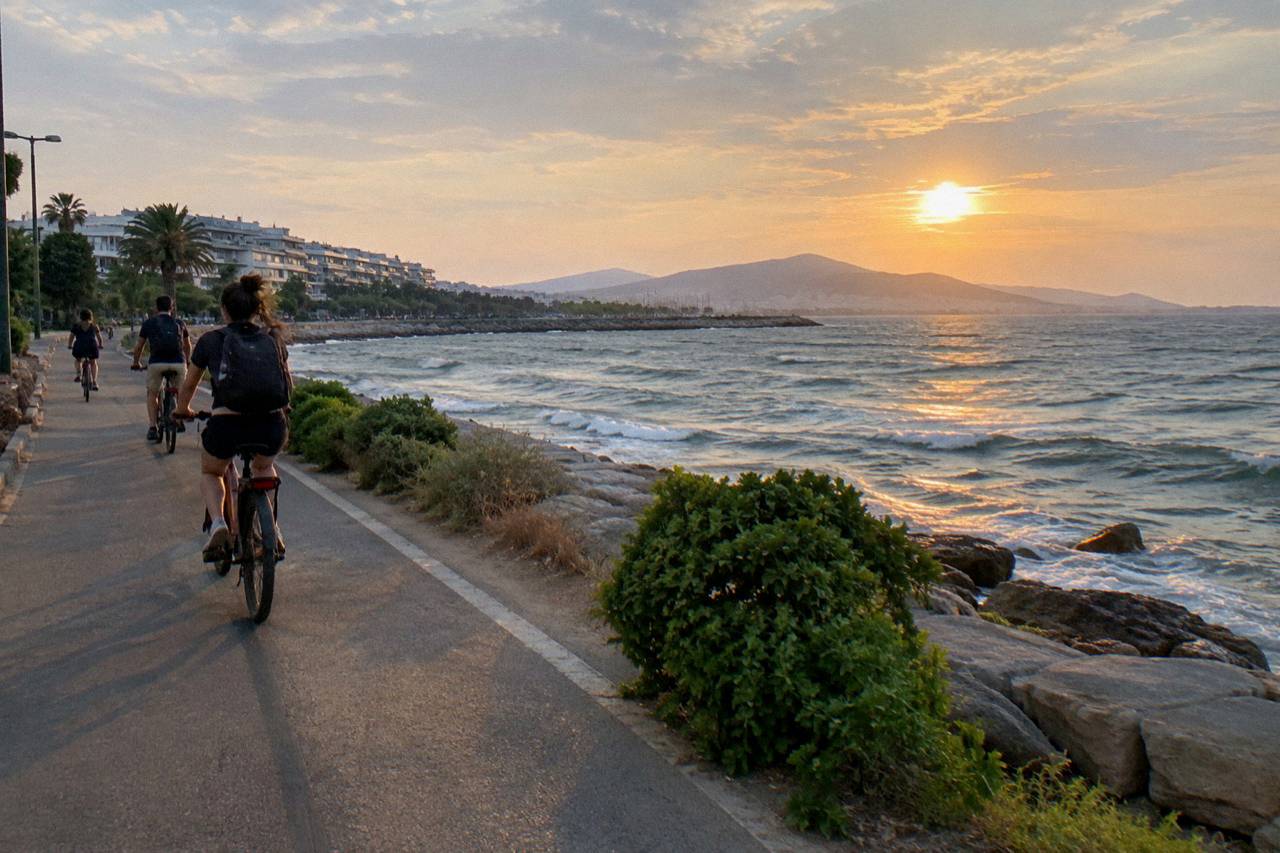
The tour options here give riders a genuine e-bike choice, and in August that choice is worth thinking about rather than treating as a small upgrade. The e-bike versions of the Athens by bike departures all come from the same meeting point at Athanasiou Diakou 16, and the same 2 hours 30 minutes format runs as a small-group e-bike ride from $33.24 per person, rated 5.0 across 1,264 reviews. A regular bike lets a rider earn the evening breeze; an e-bike turns the hills around the centre into non-events, which matters most in the hours when the body is already working hard just staying cool.

One more August-specific effect deserves a plain sentence. Marble and polished stone, which cover a great deal of historic Athens, become slippery when dry dust meets thin films of sweat and sunscreen, and slicker still when a rare summer shower crosses a hot stone surface. The sensible approach in August heat is slower lines, no hard cornering, and flat-soled shoes rather than slick-soled sandals. It is also the reason a rider chooses a bike with functioning brakes, which is an argument for the maintained fleet of a guided ride over a cheap rental in a back street.
None of this argues against riding. It argues against riding badly scheduled. The riders who suffer in Athens in August are the ones who set out at 1 p.m. with one small bottle of water and a plan that involves a long exposed climb at 2:30. The riders who enjoy it start at 9 a.m. or 6:30 p.m., carry more water than they think they need, and let the guides carry the rest of the decisions.
When Is The Best Time Of Day To Ride In August?
Mornings before about 11 a.m. and evenings from about 6 p.m. onward are the August riding windows in Athens. The first hours after sunrise bring the coolest and calmest air of the day, and the hours around sunset the best light. Between roughly 1 p.m. and 5 p.m., high sun and heat near the day's maximum make sustained pedalling a bad trade.
The morning case is the strongest. The mean minimum of 23.1 C happens just before dawn, so an 8 a.m. departure rides out on the coolest air the day will offer, with the streets still quiet, the light soft for photographs, and the heat still two or three hours from its peak. Historic Athens is compact, so a 2 hours 30 minutes ride that leaves early is comfortably back before the worst hours. That is the standard shape of the city's most reviewed tour, and the listing describes free cancellation, which matters in August: a morning departure can be moved rather than lost when a heat peak arrives.
The evening case is nearly as good and considerably more atmospheric. Sunset in August Athens falls late, and the period from about 7 p.m. to 8:30 p.m. combines dropping temperatures, gold light across the Acropolis and Lycabettus, and pavement life returning to the districts a daytime visitor sees only as hot and empty. The city has a ride built for exactly this: the Sunset Ride, Regular or E-Bike, 2 hours 30 minutes from $33.24 per person, rated 5.0 across 169 reviews, with the rider choosing between a regular bike and an e-bike at the same meeting point on Athanasiou Diakou 16. Free cancellation applies per the listing.
The after-dark extension of the same logic runs deeper into the evening. The 2-Hour Night Highlights E-Bike from We Bike Athens, from $54 per person and rated 4.9 across 580 reviews, moves the whole idea past the sunset and into the cooler air after it, with the e-bike doing the work on the slopes and the guide carrying the stories. For a visitor whose August days are already spoken for, a night ride recovers the sightseeing the afternoon took away.
Should You Consider A Coastal Ride Instead Of The City In August?
Yes, and August is the month that makes the coastal option shine. The Athens Riviera tends to run cooler than the basin, the sea breeze picks up during the day, and one ride covered here builds in a swimming stop, which no amount of city riding can offer. The Coastal Ride, Swimming Stop runs 3 hours 30 minutes from $56.16 per person, rated 4.9 across 49 reviews.
That swimming stop is the single best August feature on any tour covered on this site. A city tour can dodge the heat with timing; a coastal tour can end it, at least for half an hour, by putting the rider in the water. The Riviera beaches are the Athenians' own August answer to the heat of the basin, and a ride that finishes at the sea turns the heat from an obstacle into the reason the route exists. Other pages covering the same trip are gathered on Bike Tours Athens.
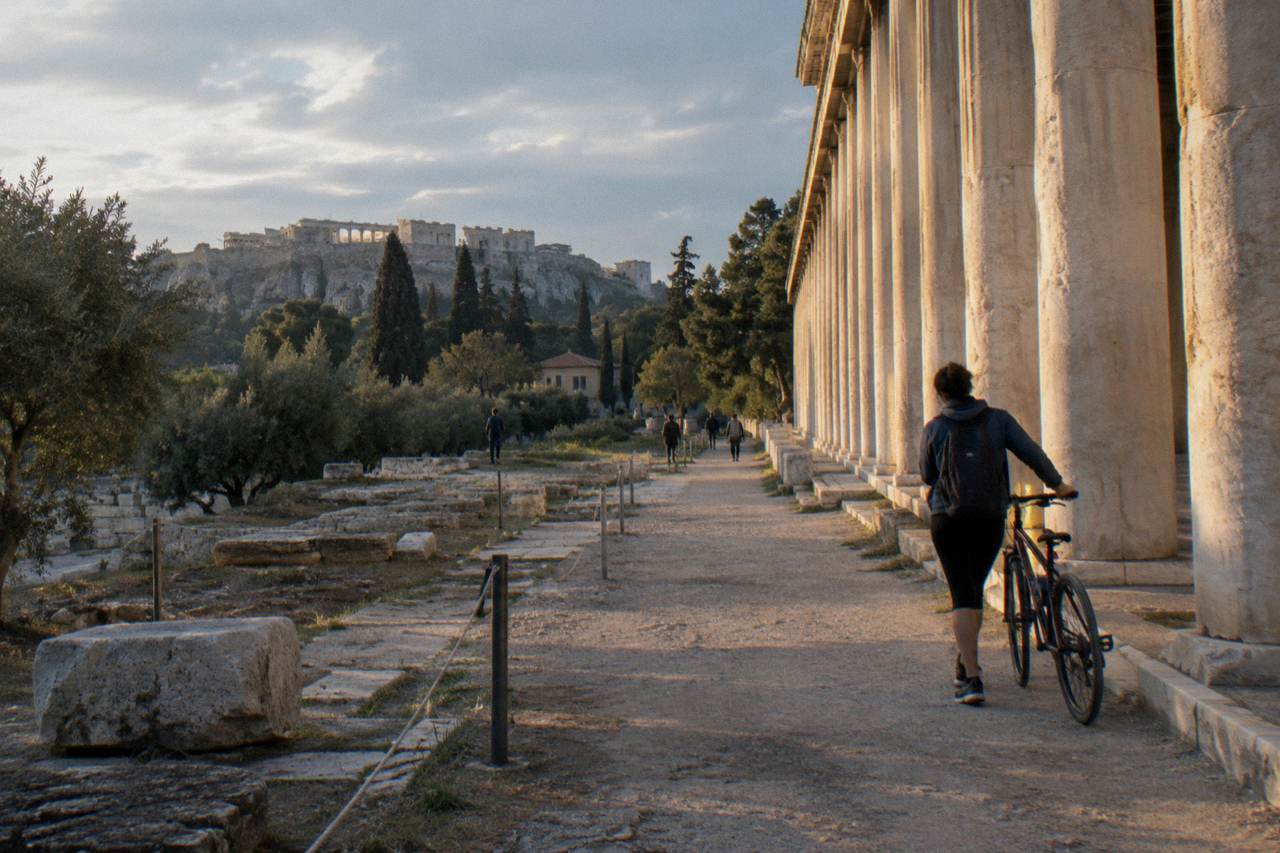
The trade-off is transport. Every tour on this site starts in Athens, and the coastal swimming tour meets at Thessalonikis 172 in the Petralona area, a regular central meeting point, so the rider is not faced with a separate transfer to Glyfada to reach the start. The route itself is the operator's to describe on the booking page, and the honest framing is simple: the coast is cooler, the swimming stop is real, and the ride runs 3 hours 30 minutes rather than the 2 hours 30 minutes of the central city tours, so it needs the same early-or-late scheduling discipline applied to a longer distance.
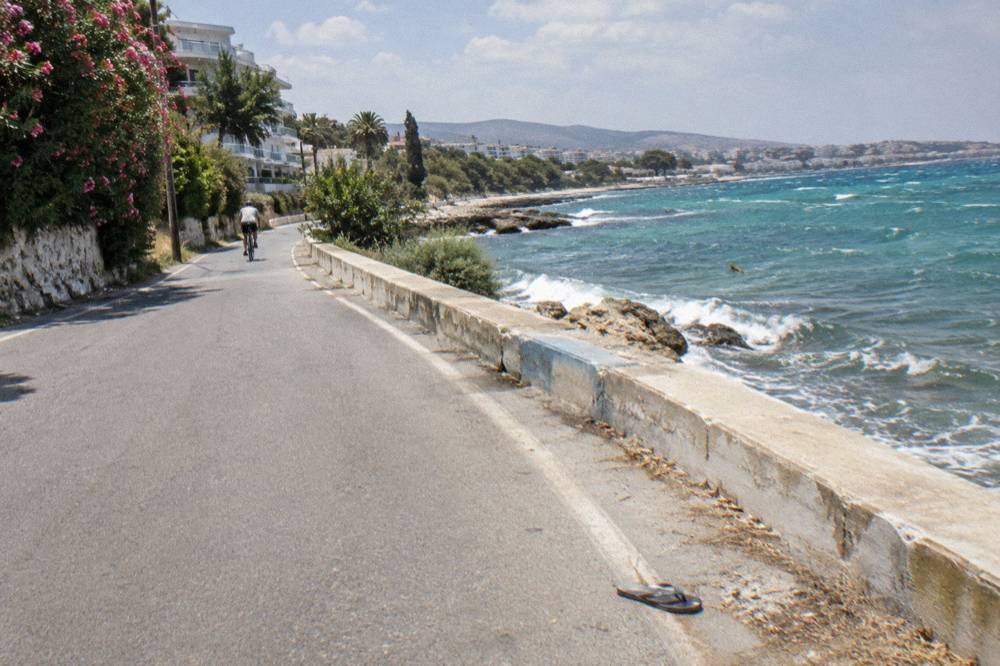
For a fuller picture of the coast as a destination, the Athens Riviera guide on this site covers the southern suburbs and beaches in detail. There is also a second coastal option in the Riviera category, the Glyfada to Voula coast ride, a 2-hour small-group tour from $28.66 per person that starts in Glyfada itself, with six reviews so far, too few for a star claim, though it carries the same free-cancellation terms.
What Should You Wear And Carry For An August Ride?
Dress for the heat as a runner would: light-coloured, loose, breathable clothing, a cap or headband under the helmet, sunglasses, sunscreen applied before departure and again mid-ride, and far more water than instinct suggests, roughly a litre for a 2 to 3 hour ride in August conditions. The August mean minimum of 23.1 C means no visitor needs warm layers for an evening ride, so the packing question is entirely about sun and hydration, not cold.
“Fantastic ride on mainly bike tracks, friendly and great host. This ride takes you to the beautiful coastal part of Athens.”
The clothing list is short. A loose shirt in a light colour, shorts that do not catch on the saddle, and closed flat-soled shoes for the slippery marble already described. A helmet is included on nearly every tour covered here, and under the road code wearing it is the rider's recommendation-driven choice rather than a legal duty, so the practical August approach is a thin cap or buff underneath for sweat and sun, sized so the helmet still sits level. Sunglasses matter more than almost anything else on the list, because August Athens is low on shade and high on glare off white stone.
Water is the item that separates a good August ride from a bad one. The listings state their inclusions plainly, usually bottled water and sometimes a small Greek treat or pastry tasting, but the honest planning assumption for August is that a rider carries a full bottle regardless and refills at every stop the guide offers. Sunscreen is the second non-negotiable, applied before the ride rather than at the first stop, because the sun in Athens in August is strong enough to burn through a two-hour ride on open stretches.
The city itself supplies the rest of the answer. A route that uses the shaded slopes below the Acropolis, the plane trees of the pedestrian streets, and the evening drop in temperature does most of the physiological work for the rider. For a full packing treatment, the what to wear on an Athens bike tour guide on this site goes through the wardrobe question season by season, and the summer heat cycling guide covers the physiological side in more depth than a single article can.

One item earns its own paragraph because August visitors consistently underestimate it: salty snacks. Riding in August heat drains fluids and electrolytes faster than most people realise, and tours that build in a tasting stop handle part of that problem for you. The City and Sea e-bike tour, from $51.58 per person, folds a pastry tasting into the ride, which gives you both a break from pedalling and something to eat along the way. For tours that include nothing, a small pack of salty biscuits or nuts in a pocket is worth its weight in Greek pastries.
Is August Or September The Better Month To Visit Athens?
On the climate record alone, September is the better cycling month: its mean of 24.3 C and maximum near 28.3 C sit four degrees under August, while rain stays modest at 12.3 mm. August is the better month for quiet sites, empty hotels, and evening atmosphere, and its heat is workable with morning and evening scheduling, so September is easier and August is emptier, and neither month is the wrong choice.
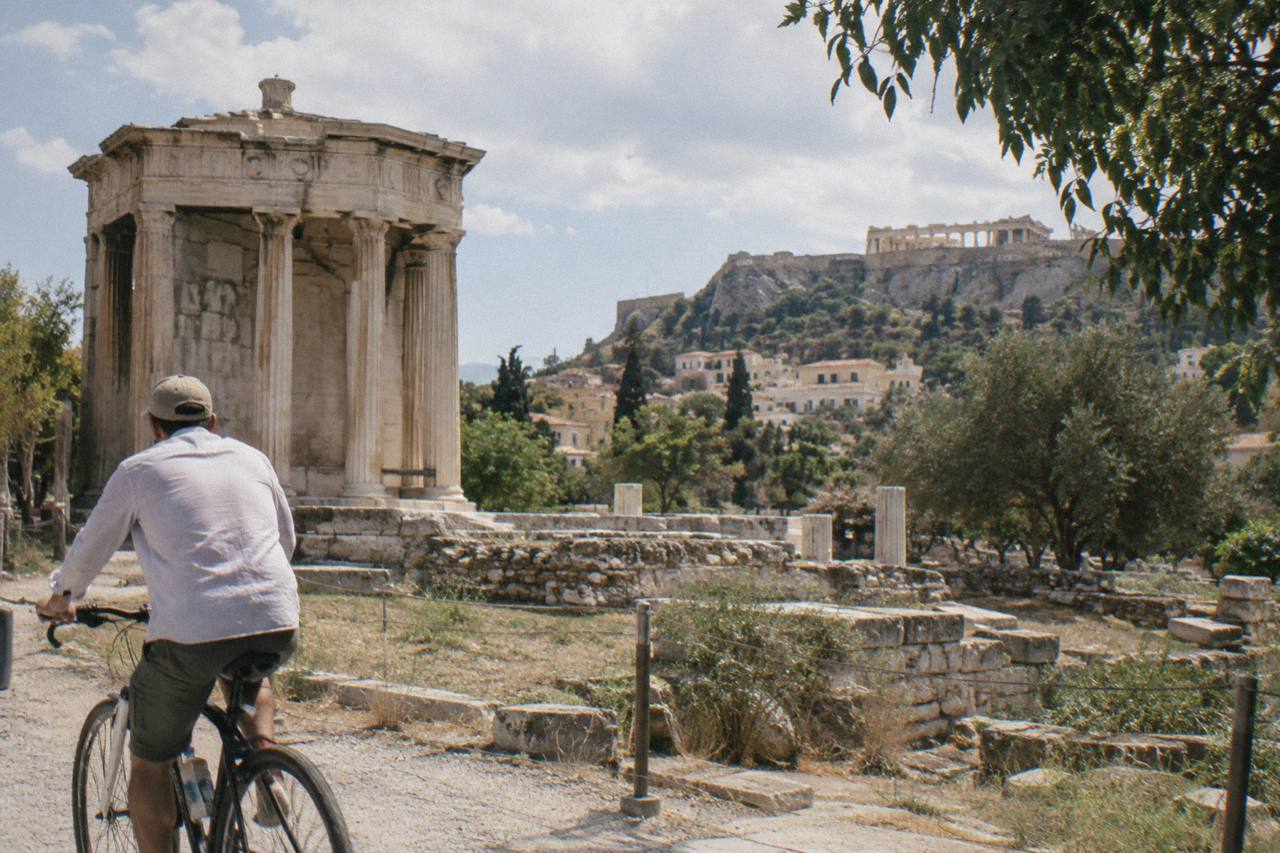
The numbers make the comparison concrete. Dropping from August's 28.2 C mean to September's 24.3 C mean moves a rider from a month where midday riding is a mistake to a month where it is merely warm, and the rain trade is trivial, 6.2 mm becoming 12.3 mm, both effectively dry months for practical purposes. The mean minimum falls from 23.1 C to 19.6 C, which means September nights actually refresh, and a rider who starts at 9 a.m. in September starts on genuinely cool air.
But August has its own case, and it is not a consolation prize. August in Athens runs on the quiet side of summer, at least by the standards of the season, and the evenings around the historic districts take on the outdoor life the city is famous for. A visitor who rides at 8:30 a.m., hides indoors or by a pool from 1 p.m. to 5 p.m., and rides again or walks the old streets at 8 p.m. gets the best of the month and almost none of the penalty. The best time to cycle in Athens guide on this site goes month by month for riders who can pick their dates freely.
For riders who cannot, August rewards a specific booking pattern. The tours that depart in the workable hours, particularly the sunset and night departures, are the ones that sell first in high summer, and the free-cancellation terms on most of the options covered here are the tool for a heat-peak week: book the early morning, keep the sunset as a backup, and shift rather than lose. The Regular or E-Bike, Optional Acropolis tour, the most reviewed ride here at 3,666 reviews with a 5.0 rating and a from-price of $40.12 per person, runs in the standard morning and evening slots from the Athanasiou Diakou 16 meeting point, and its listing describes free cancellation plus an optional licensed-guide Acropolis visit with the entry ticket not in the from-price unless that option is picked.
What The Heat Means For The Rest Of Your Athens Plans
The bike ride is the easy part of an August itinerary, because it moves and it schedules itself around the sun. The harder parts are the standing ones: archaeological sites, queues, and midday walks, where the 1 p.m. to 5 p.m. window bites hardest. Plan the standing activities before 11 a.m., the moving ones in the evening, and August stops being a question of endurance and becomes a question of sequence.
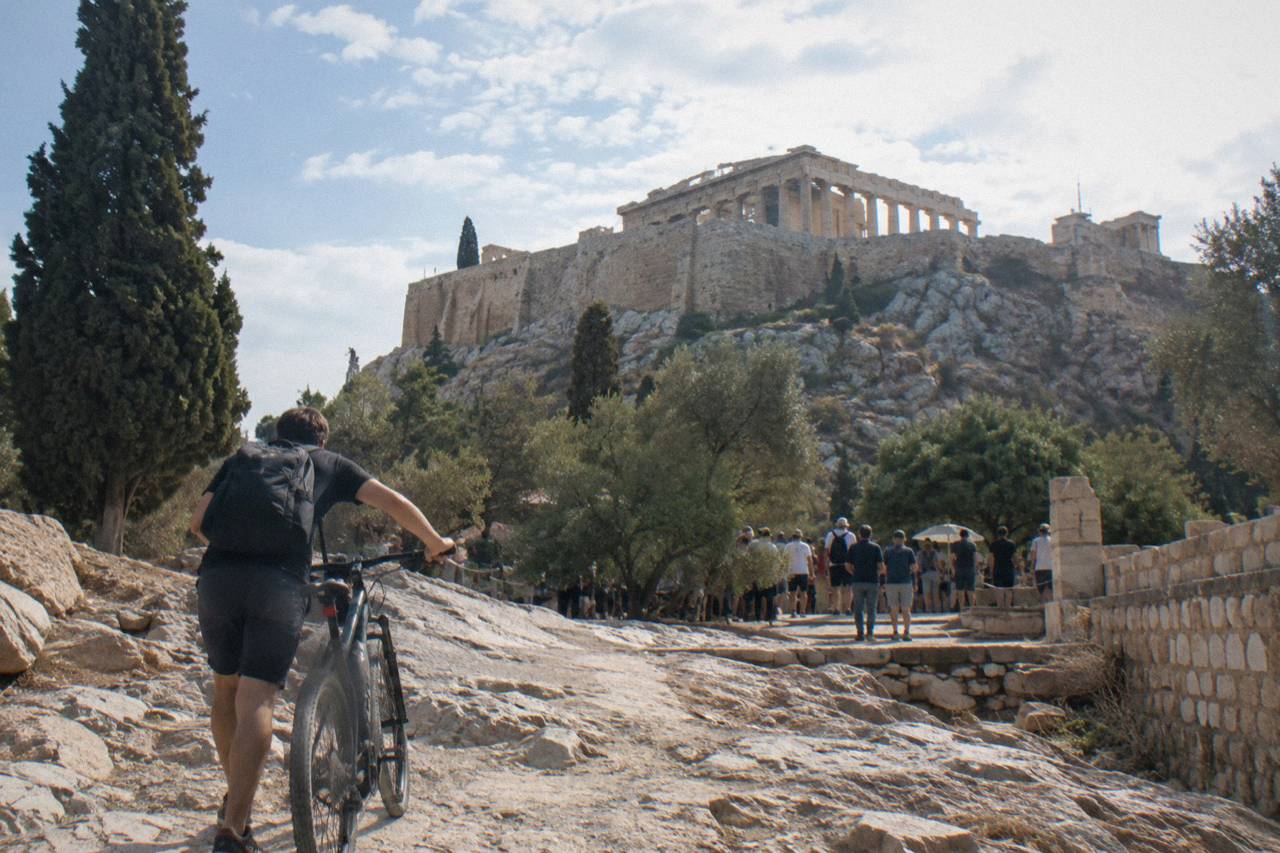
Athens in August rewards a visitor who thinks in hours rather than days. The climate data, the road code, the tour schedules, and the one documented heat closure all point to the same shape of visit: early for the stones, late for the streets, water everywhere, and a booking with free cancellation so a heat peak rearranges the plan instead of ruining it. The month is not too hot to visit. It is too hot to visit carelessly.

Common Questions About Athens In August
Is Athens Too Hot To Visit In August?
No, but the midday hours demand respect. The official coastal record puts August at a mean of 28.2 C with maxima near 32.2 C, and central Athens runs warmer by day. Mornings before 11 a.m. and evenings from about 6 p.m. are comfortable for riding and walking, and the 1 p.m. to 5 p.m. window is best spent indoors or in the sea.
How Many Rain Days Does Athens Have In August?
About 1.6 rain days, delivering roughly 6.2 mm across the whole month on the HNMS Elliniko station normals. Practically, a wet afternoon in August is unusual, and no visitor needs to build weather flexibility into the itinerary the way they would in October or November, when rain days climb toward nine to eleven.
Is An E-Bike Better Than A Regular Bike In The August Heat?
Often yes. A regular bike turns the hills into effort, and effort in August heat costs sweat and energy a rider is already spending on temperature control. The Athens by bike tours let the rider choose regular or e-bike, with the small-group e-bike version from $33.24 per person, and the e-bike removes the climbs from the equation entirely.
Do Athens Bike Tours Get Cancelled When It Gets Too Hot?
The one documented heat measure on record was the Ministry of Culture closing the Acropolis from 1 p.m. to 5 p.m. for two July afternoons during weather near 40 C, and official heat advice for tourists is to sightsee early in the morning, stay hydrated, and monitor daily announcements. Most of the tours described here carry free cancellation per the listing, so a heat peak rearranges a booking rather than losing it.
Is A Sunset Bike Tour Worth It In August?
Yes, and August is arguably the best month for one, because sunset falls late and the temperature drop after 7 p.m. is the biggest relief of the day. The Sunset Ride, Regular or E-Bike runs 2 hours 30 minutes from $33.24 per person, rated 5.0 across 169 reviews, with free cancellation per the listing.
Which Month Is Cooler, August Or September In Athens?
September, by about four degrees. The HNMS normals put September at a mean of 24.3 C with maxima near 28.3 C, against August's 28.2 C and 32.2 C, while rain only rises from 6.2 mm to 12.3 mm, still a dry month. September nights cool to a mean minimum of 19.6 C, so the city refreshes overnight in a way it does not in August.