Cycling In Athens Summer Heat: Water, Timing And Sun
Athens in July and August behaves like a heat basin: the official coastal station averages a July maximum of 32.2 C, and the concrete of the centre runs warmer than that by mid afternoon. A bike tour here is still one of the best ways to see the city, because a moving rider gets a breeze a walking visitor never does. What changes in summer is the timing, the water, and the choice of tour.
Short answer
Plan around the heat rather than against it. Athens averages July and August maxima of 32.2 C with under two rain days per month, so book a morning, sunset or night departure, carry more water than feels reasonable, and pick a tour that matches the clock: the 2.5-hour Sunset Ride from $33.24 per person, or the morning Regular or E-Bike tour from $40.12 per person, are the two shapes that work best.
Summer is when Athens looks its most photographed and feels its least forgiving. The marble around the Acropolis bounces heat back at anyone standing on it by early afternoon, the pavements in Plaka and Psyrri stop radiating that heat only late at night, and a rider on a bike is one of the few people in the city actually generating a breeze. That is the honest case for cycling here in the hot months, and this guide exists to make that case workable: what the climate record actually says, which departure times matter, what to carry, and which of the guided tours covered on this site are shaped for heat. If you want the bigger picture before committing to a date, the month by month Athens weather guide for planning outdoor rides shows which months give you the best odds.
One thing worth saying early, because it shapes everything below: Bike Tours Athens covers a city where the hottest weeks are also the driest. The two facts are connected. Rain barely features in the Athens summer, so the planning problem is never will it pour, it is at what hour does the asphalt stop being unpleasant. Everything in this article is built around that question.
How Hot Does Athens Actually Get In Summer?
Athens averages summer maxima of 29.2 C in June, 32.2 C in July and 32.2 C in August, measured at the official coastal station at Elliniko, and those are monthly means of daily highs rather than heatwave peaks: individual days run well above them, and the city centre runs warmer still. Rain is almost irrelevant in the same window, with 5.4 mm in June, 6.3 mm in July and 6.2 mm in August, spread over 3.6, 1.7 and 1.6 rain days respectively. In practical terms, a summer rider in Athens is planning for heat and for glare, not for weather.
The source matters here. These numbers are the HNMS climate normals for the Elliniko coastal station, the official long-period record from the Hellenic National Meteorological Service, published on its climatology page for Athens Elliniko. Elliniko sits by the sea at low altitude, which is exactly why it reads cooler than the streets a rider actually pedals through. Central Athens, with its stone, asphalt and narrow streets that trap the day's heat, can run several degrees warmer by day than the station record, and it holds that heat later into the evening. Any tour description that quotes a temperature for "Athens" is quoting a coastal baseline the ride itself will likely exceed.
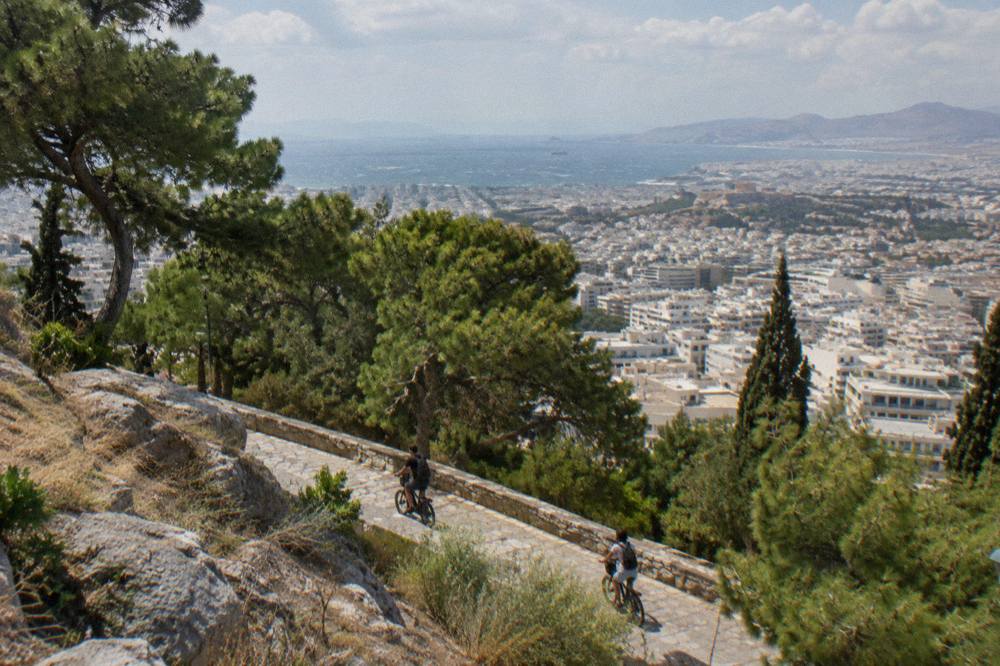
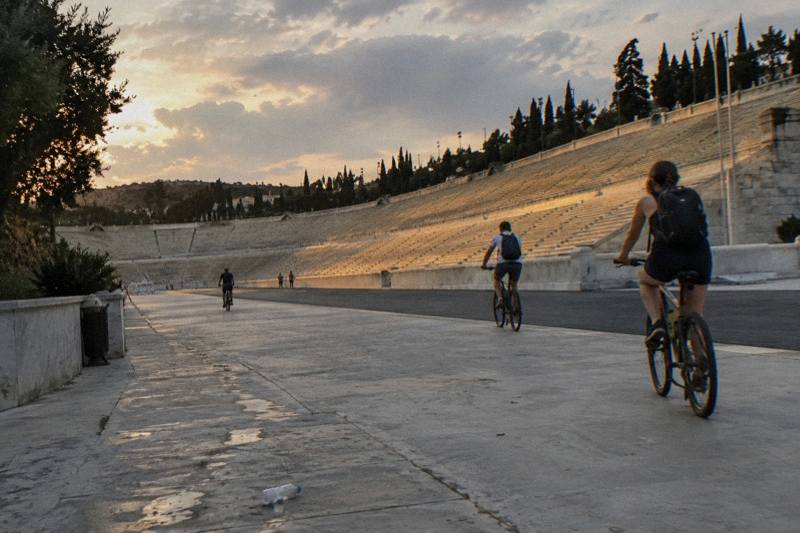
The shape of the summer day is the part a cyclist can plan around, and it is consistent. Around dawn the city is at its coolest and its quietest. The climb from late morning through early afternoon is steep and unforgiving, especially on unshaded stretches. By mid afternoon the centre is at its worst for any slow, standing-in-the-sun activity. Then the release comes: the sea breeze reaches the western neighbourhoods in the late afternoon, the light turns golden rather than white, and after sunset the temperature falls in steps instead of smoothly. A guided ride that starts at 6 p.m. experiences a completely different city from one that starts at noon, on the same streets.
The table below is the summer slice of the climate normals, the three months a heat-focused rider cares about most plus the shoulder either side, because June and September are where the value hides.
| Month | Mean C | Daily max C | Precip mm | Rain days |
|---|---|---|---|---|
| May | 20.9 | 24.4 | 14.3 | 6.4 |
| Jun | 25.6 | 29.2 | 5.4 | 3.6 |
| Jul | 28.3 | 32.2 | 6.3 | 1.7 |
| Aug | 28.2 | 32.2 | 6.2 | 1.6 |
| Sep | 24.3 | 28.3 | 12.3 | 4.7 |
Read that table as a booking calendar and it answers a question people ask constantly: June runs only a few degrees cooler than August on the daily maximum, while the city has not yet hit its full summer bake. September is warmer than most visitors expect, but the mornings are workable and the light is already autumn-soft. If the trip has any flexibility at all, the shoulders are where a comfortable ride lives.
Which Departure Times Beat The Heat In Athens?
The three windows that work in July and August are early morning (roughly the first three hours after sunrise), the late afternoon into sunset, and after dark; the window to avoid is the four hours centred on mid afternoon, when the daily maximum hits and the city's stone is at its most radiating. Most guided rides in Athens run 2 to 3 hours, short enough that a morning start finishes before the worst of the day and a sunset start only begins after it. That is the whole trick, and it costs nothing but a booking decision.
The site's tour set is built around exactly this. The flagship daytime option is the Regular or E-Bike, Optional Acropolis tour, a 2 hour 30 minute ride from $40.12 per person, rated 5.0 across 3,666 reviews, with a group max of 12 and a helmet included. It is the most reviewed ride on this site by a wide margin, and the reason is simple: 2.5 hours is a length that works year-round, including a July morning. Book it in the first departure of the day and the heat question shrinks dramatically. Check availability for the morning slots, because those are the ones that sell out first in high summer.
The evening slot deserves its own paragraph, because it is the single best heat answer on the calendar. The Sunset Ride, Regular or E-Bike is the same 2 hours 30 minutes, from $33.24 per person, rated 5.0 across 169 reviews, tied with the Small Group E-Bike Tour for the lowest from-price among rides here with more than 15 reviews. A rider who books it in August spends the first hour in falling heat and the second in proper dusk, with the Acropolis lit and the streets emptying. Nothing about the route changes; only the clock does.
There is also a fully after-dark option, which matters on the weeks when even the late afternoon is punishing. The 2-Hour Highlights Tour by E-Bike After Sunset run by We Bike Athens covers the lit centre from $54 per person, rated 4.9 across 580 reviews, with a helmet, guide and bottled water included. Night riding trades the heat for the headlamp question, and Greek law has a clear answer on the lights front: Article 80 of the road code requires one white or yellow front light, one red rear light or reflector, side reflectors and pedal reflectors, though it exempts small-wheeled, racing and mountain bikes from part of that. The tour bikes come fitted by the operator, so the rule is one a guided rider never has to think about. More detail on the rules themselves sits in the cycling rules in Greece guide.

For anyone building a full summer itinerary, the deeper season-by-season picture, including which months pair best with which routes, is in the best time to cycle in Athens guide. The short version for this page: in July and August, book the earliest or latest slot the operator offers, and treat anything departing between roughly noon and 4 p.m. as a September option instead.
What Should A Cyclist Carry In Athens Heat?
Carry more water than feels reasonable for July and August riding, plus electrolytes for anything longer than a short loop, and treat sunscreen, a covered scalp under the helmet and sunglasses as non-optional gear; on the guided tours several rides already include a drink in the price, which changes the packing list. The instinct that says a morning ride is short is the one that empties water bottles early, because Athens heat plus modest effort on a gradient empties riders faster than the distance suggests.
- Riviera And Coast Rides$28.66
- E-Bike Tours$33.24
- Sunset And Night Rides$33.24
- City And Acropolis Rides$40.12
- Private And Day Trips$61.90
The coastline-on-ebike ride run by MTM Experiences lists bottled water included in its from-price of $74.50 per person for a 3-hour coastal ride. The small-group scenic e-bike from Active Athens Holidays, 3 hours from $57.31 per person, lists drinks included too. The night highlights ride from We Bike Athens includes bottled water only. On those, the packing question shrinks to snacks and sun cream for the exposed stretches. On rides without a listed drink, the general guidance in the what to bring on an Athens bike tour guide applies, and in summer the water allowance in it should be read as a floor, not a suggestion.
Clothing is the other half. Loose, light-coloured, breathable kit, a cap or headband under the helmet to stop the scalp burning through the vents, and a light long-sleeve layer for anyone who burns fast are the standard set. The full kit discussion, including what works in shoulder seasons, lives in what to wear on an Athens bike tour. The summer-specific point that guide does not need repeating at length: the sun in Athens is direct, the shade in the centre is patchy, and the marble and asphalt double the exposure from below.
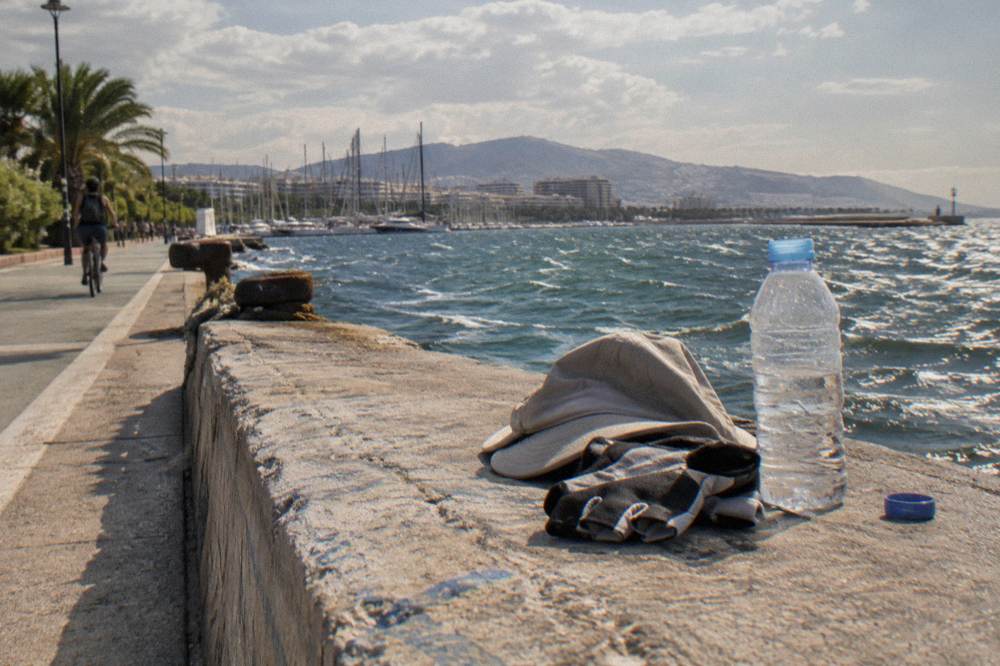
The timing of refills matters as much as the carrying. Convenience stores and kiosks are dense across the centre, so a guided group in Koukaki or Plaka is never far from a cold bottle, and guides on the rides here know the stops. What does not work is planning to find water later on the unshaded eastern stretches or on any coastal segment, where the next shade can be a long way off. Drink before the ride, drink at the first stop, and do not let thirst be the first signal.
| Carry item | Why it matters in Athens summer | Notes for guided tours |
|---|---|---|
| Water, carried and refilled | Heat plus effort empties riders fast | Several rides list bottled water; check the booking page |
| Electrolytes | Replaces salt lost in 30 C-plus riding | Cheap tablets or sachets, any kiosk stocks juice as backup |
| SPF 30-plus sunscreen | Sun is direct and reflects off marble | Reapply at any stop past the first hour |
| Cap or headband under helmet | Scalp burns through helmet vents | Bring your own; not all rides list caps |
| Sunglasses | Glare off stone and white buildings | Any pair; also keeps dust out on descents |
One closing note on hydration that belongs here rather than in any gear list: the road code in Greece is strict about hands and attention. Holding a phone or smartwatch while riding carries a 350 EUR fine, and so does wearing headphones, under Article 44 of Law 5209/2025. Neither rule is about water, but both push in the same direction: stop, dismount, drink, then ride. A guide who calls a water stop is not being soft, they are running the ride the law and the climate both expect.
Do Athens Rides Get Cut Short When A Heatwave Hits?
Yes, in the sense that heatwaves have already forced closures of outdoor Athens attractions, with the one verified case being the Acropolis shutting from 1 p.m. to 5 p.m. on 8 and 9 July 2025 near 40 C; tour operators in Athens respond by shifting departures toward mornings and evenings rather than cancelling outright, which is why the sunset and night rides on this site exist as fixed products rather than improvisations. That 2025 closure, reported as a Ministry of Culture decision during the July heatwave, is the clean example of how the city handles extreme heat: the affected sites close at midday, the morning proceeds as normal, and the evening reopens.
What that means for a rider is concrete. Any tour with Acropolis content can be reshaped by a heat closure, and the two Acropolis rides here describe their own arrangements. The E-Bike Tour, Acropolis Tickets Included is a 4 hour 30 minute ride at from $79.09 per person, rated 5.0 across 741 reviews, with the Acropolis entry ticket inside the price when booked in that option. The Regular or E-Bike daytime tour offers the Acropolis visit as an option with a licensed guide, with the entry ticket not in the from-price unless that option is selected. On a heat-advisory day, a morning departure of either ride happens before the closure window opens, which is exactly why the operator runs them early in summer. If you're weighing whether August is the right month for your trip at all, our guide to Athens summer heat and how it affects visitors explains what to expect and how to plan around it.

The honest planning advice is to build slack into the booking. Every ride listed on this site carries free cancellation per its listing, so a rider who books a 2 p.m. departure and then sees a heat advisory can move to a sunset slot without losing the money, subject to the operator's own cut-off. The failure mode is booking the only midday slot of a short trip and having no alternative. The fix is to book early-departure or sunset slots from the start, and to treat the mid-afternoon window as dead time for museums and shade rather than as riding time.
The heat itself also changes what a body does on the bike, whatever the thermometer says. Uphill stretches that feel easy in April feel like work in August, and the e-bike option that several rides here offer exists partly for this. The Regular or E-Bike tour, the Small Group variant at from $33.24 per person rated 5.0 across 1,264 reviews, and the Sunset Ride all let the rider choose regular bike or e-bike at booking, per their listings. In July and August, the e-bike choice buys back the middle hour of a ride that a hot rider would otherwise spend wilting. The trade-offs are laid out in full in electric bike vs regular bike in Athens.
Which Athens Tours Handle Hot Weather Best?
The tours that handle Athens summer best are the short ones with a sunset or night departure, and the coastal rides where the sea breeze does half the cooling work: the 2.5-hour Sunset Ride at from $33.24 per person, the 2-hour Night Highlights ride at from $54, and the coastal options that put the rider within reach of the water by mid ride. Length is the enemy in heat; a 4.5-hour ride in August is a different proposition from the same ride in April.
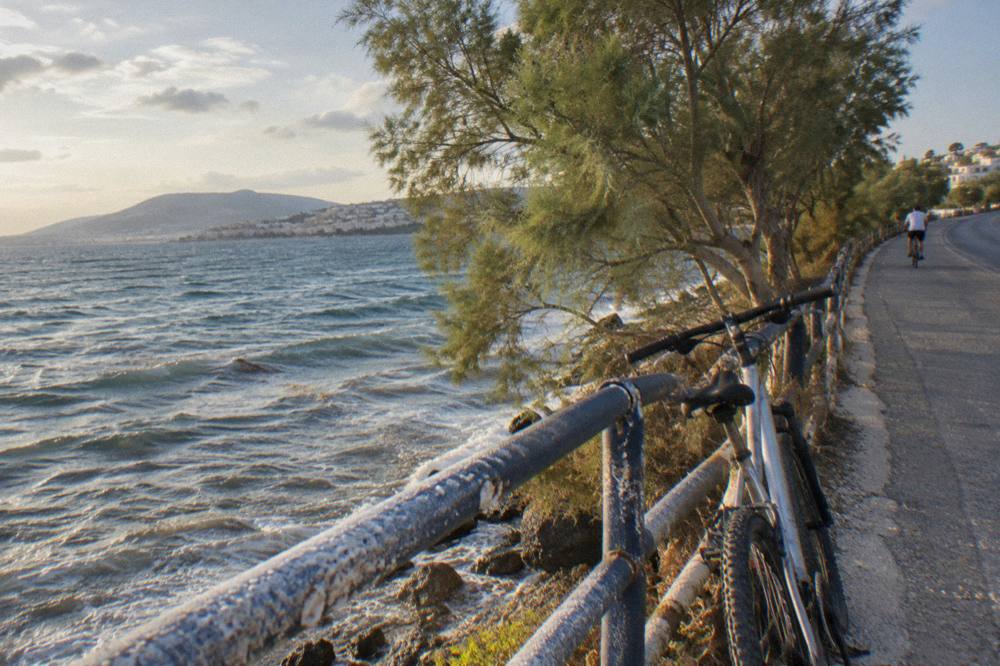
The coastal case is worth its own section because the sea breeze is a real mechanism, not a travel-brochure phrase. Athens sits on a coast, and on hot afternoons the air moves onshore as the land heats, which is why the Riviera rides feel noticeably cooler than the centre at the same hour. The Coastal Ride, Swimming Stop run by Suncycling Athens is the most explicit heat answer in the whole set: 3 hours 30 minutes at from $56.16 per person, rated 4.9 across 49 reviews, on regular bikes with a group max of 10, and the stop in its name is a swim. A rider who gets into the sea at the midpoint of a July ride has solved the heat problem in a way no water bottle can.
The City to Sea E-Bike ride from Athens by bike makes the same point in a longer format: 4 hours 30 minutes at from $51.58 per person, rated 4.9 across 273 reviews, e-bike only, group max 15, with a pastry tasting included and the coastline in the route. Four and a half hours is long for August, but the e-bike flattens the effort and the second half of the ride runs where the breeze lives. Riders who want the coast without the length can look at the Athens Riviera bike ride guide for how the coastal options compare.
For the full range of evening-format rides, including how the sunset and night options differ in route and light, the Athens sunset bike tour guide walks them side by side. And for riders whose instinct in heat is to skip the centre entirely for a beach day, the Athens beaches guide covers what is reachable and how the coastal rides connect to it. New visitors still mapping out their whole trip can start with the first-time visitor's guide to Athens, which orders the landmarks and shows where a bike ride fits into each day.
| Tour format | Summer behaviour | Best booking window |
|---|---|---|
| 2 to 2.5-hour city ride | Short enough to finish before the midday peak | First morning departure |
| Sunset ride | Starts as the day cools, ends in dusk | Late afternoon slot |
| Night highlights ride | Runs fully after dark, hottest hours avoided | Evening |
| Coastal ride with swim stop | Sea breeze plus a mid-ride cooling swim | Late morning or afternoon |
| 4 to 5-hour ride | Long in heat unless e-bike and coastal breeze offset it | Morning, e-bike option |
One format that deserves a caution rather than a recommendation in high summer is the long inland day trip. The 12-hour Aegina E-Bike and Walking Day Trip at from $158.18 per person is a genuinely different product, a full island day with the crossing inside the tour time, but a private day trip that length in August is a commitment a heat-averse rider should think through, and its total depends on group size, so the booking page is where that decision belongs.
What Do The Rules Say About Riding In Athens Heat?
The Greek road code treats heat-season riding the same as any other riding: a helmet is recommended rather than mandatory for bicycle riders, riding two abreast is prohibited with a 30 EUR fine, holding a phone or smartwatch carries 350 EUR, headphones carry 350 EUR, and running a red bicycle signal carries 150 EUR, per the Ministry's published fine table. The rules matter more in summer, not less, because heat is when riders cut corners: pushing through an intersection to keep moving rather than stopping in the sun, or skipping a dismount on a pedestrian stretch because stopping feels like standing in an oven.
The helmet point is worth stating precisely because it is so often printed wrong. Under Article 44 of Law 5209/2025, helmets are recommended for bicycle riders, including the e-bikes sold as bicycles that most tours here use; it is the e-scooter type of vehicle, the EPMV, where a helmet is mandatory with a 30 EUR fine. Most guided rides here include a helmet with the booking, though a few listings leave it unstated, so check the live page before you ride. In the August heat that helmet doubles as sun cover as much as protection. The fines quoted here are the Ministry of Infrastructure and Transport's published table for the 2025 road code.
Two of the code's rules interact with heat in ways a visitor might not expect. The first is the dismount rule: riders must get off and walk when they obstruct or endanger pedestrians, with a 30 EUR fine attached. In summer this bites hardest in the shaded passages around Plaka and the Acropolis approaches, exactly where a hot rider most wants to keep rolling and where foot traffic is thickest. The second is the cycle-lane rule: where a cycle lane exists, cyclists may not use the rest of the carriageway. On a guided tour none of this is the rider's problem to police, the guide sets the line, but a rider who knows the rules understands why the guide stops the group where it does.
Alcohol is the quiet heat risk. There is no cyclist-specific limit in Greek law; Article 46 applies to every road vehicle, with impairment from 0.50 g/l blood or 0.25 mg/l breath. Summer Athens pairs cold beer with every terrace in view of the Acropolis, and the line between a beer at the lunch stop and an unlawful ride after it is thinner than most visitors assume. The safest summer interpretation: the drink goes after the ride, not before the last stretch of it.
How Do You Combine Bikes, Heat And Athens Transport?
Two bicycles ride free in the last door of every metro train, folding bikes are the only bikes buses take (in a holder of at most 33x66x80 cm), and a 90-minute ticket costs 1.20 EUR with a day ticket at 4.10 EUR, so the practical summer pattern is metro out early, ride in the cool hours, and metro back before the afternoon peak. The OASA passenger regulation puts elevators rather than escalators in the rules for cyclists, which in summer is a mercy: the metro is the one reliably air-conditioned place in a hot Athens afternoon.
That metro-bike combination is how a visitor without a guided booking still rides in heat. Take a bike or rent one near a station, ride the early morning window while the streets are empty, and put the machine back before the day peaks. Current OASA fares make the day ticket at 4.10 EUR the obvious choice for anything beyond a single ride out. For longer escapes, Hellenic Train carries up to four conventional bicycles free on the Athens-Chalkida, Piraeus-Airport and Piraeus-Kiato services, per its bicycle transport page, which opens coastal riding well beyond the city, with its own carriage limits worth checking on the operator's own page.
One thing not to plan around: a city bike-share network. The Municipality of Athens announced a tender in September 2026 to lease a network of at least 200 e-bikes across 50 stations with 340 docking positions on a three-year lease, but no municipal dock-based scheme is documented as operating yet, and neither the auction outcome nor a launch date has been confirmed. A rider planning a summer trip today plans around guided tours, rental bikes and the metro, not around a scheme that exists so far only on paper. The Athens bike rental guide covers the rental half of that equation.
The guided-tour version of the same logic is simpler, because the operator owns the logistics. Every tour covered here starts in Athens, at a listed meeting point in the Acropolis-adjacent neighbourhoods or, for the Riviera rides, in Glyfada. Nothing in the set involves a hotel pickup, so the metro-to-meeting-point move above is what the first ten minutes of every one of these rides looks like: a cool train, an elevator, and a short walk to a bike already waiting in the shade.
Common Questions About Cycling In Athens Summer Heat
Is Athens Too Hot For A Bike Tour In July And August?
The daily maximum averages 32.2 C in both July and August at the coastal Elliniko station, and the centre runs warmer. A bike tour is still workable in those months, because a moving rider gets airflow a walking visitor does not, but the tour has to be timed: book a morning, sunset or night departure, and avoid the mid-afternoon window where the heat peaks.
What Time Of Day Is Best For Cycling In Athens In Summer?
The best windows are the first three hours after sunrise and the late afternoon into sunset, with night rides a further step cooler. Most tours here run 2 to 3 hours, so a morning start finishes before the peak and a sunset start begins after it. The midday-to-4 p.m. stretch is the one to leave to museums and shade.
Do Athens Bike Tours Get Cancelled In A Heatwave?
Heatwaves have triggered attraction closures before: the verified case is the Acropolis closing from 1 p.m. to 5 p.m. on 8 and 9 July 2025 near 40 C. Guided rides typically respond by moving departures earlier or later rather than cancelling, and every tour on this site carries free cancellation per its listing, so a heat advisory rarely costs a rider their money.
How Much Water Should I Carry On A Summer Ride In Athens?
More than you would for a cooler climate: heat above 35°C drains you fast, so pack plenty of water plus electrolytes for longer rides, and refill at stops along the route. Several rides include bottled water in the price, including the 3-hour coastal e-bike ride at from $74.50 per person, while the small-group scenic e-bike at from $57.31 per person adds coffee or tea, so check the booking page before packing.
Are Helmets Mandatory On Athens Bike Tours In Summer?
No. Under Article 44 of the Greek road code, helmets are recommended for bicycle riders, not mandatory; the mandatory helmet applies to e-scooter-type vehicles. Most listed tours fold a helmet into the price, though a few leave it unstated, so check the booking page for each ride. In July heat, a helmet also works as sun cover. In July and August, usually yes, because the motor removes the sweat cost of the city's gradients. Several rides let the rider choose regular or e-bike at booking, including the most reviewed tour here at from $40.12 per person and the Sunset Ride at from $33.24, so the choice costs nothing but a booking-page selection.Is An E-Bike Better Than A Regular Bike In Athens Heat?