Athens Beaches: Where To Swim Near The City
Athens is closer to open water than almost any European capital, and the Riviera beaches at Glyfada and Voula sit within reach of a half-day ride. This guide covers which beaches near Athens you can swim at, how the coast rides get you there, what those tours cost, and when the sea turns warm.
Short answer
The swimmable beaches closest to Athens sit along the Riviera, with Glyfada and Voula the two named stops reached on guided rides. The Glyfada to Voula coast ride runs 2 hours from $28.66 per person, the Coastal Ride with a swimming stop runs 3 hours 30 minutes from $56.16, and the City to Sea e-bike ride runs 4 hours 30 minutes from $51.58 with a pastry tasting.
Most visitors picture Athens as marble and traffic, not swimming. The city hugs the Saronic Gulf, and the coastline south of the centre strings together a stretch of shore that locals treat as their summer extension of the city. The Riviera, the stretch of coast running south from the urban fringe, holds the beaches most visitors actually swim at, and the two names that recur on every coastal excursion are Glyfada and Voula.
Getting there is the interesting part. A tram ride covers part of the coast, buses cover the avenues, and a growing number of guided bike rides now link the archaeological core with the water. Some of them build in an actual swimming stop, which changes the day entirely: you ride, you swim, you ride back. This page puts the beach question first and works outward: where to swim, how the coast rides reach the sand, what they cost, and when the sea is warm.
Which Athens Beaches Can You Actually Swim At?
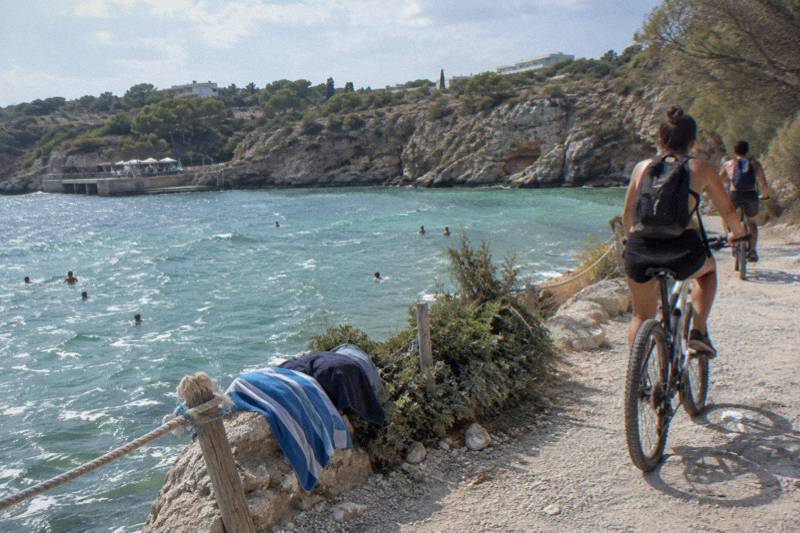
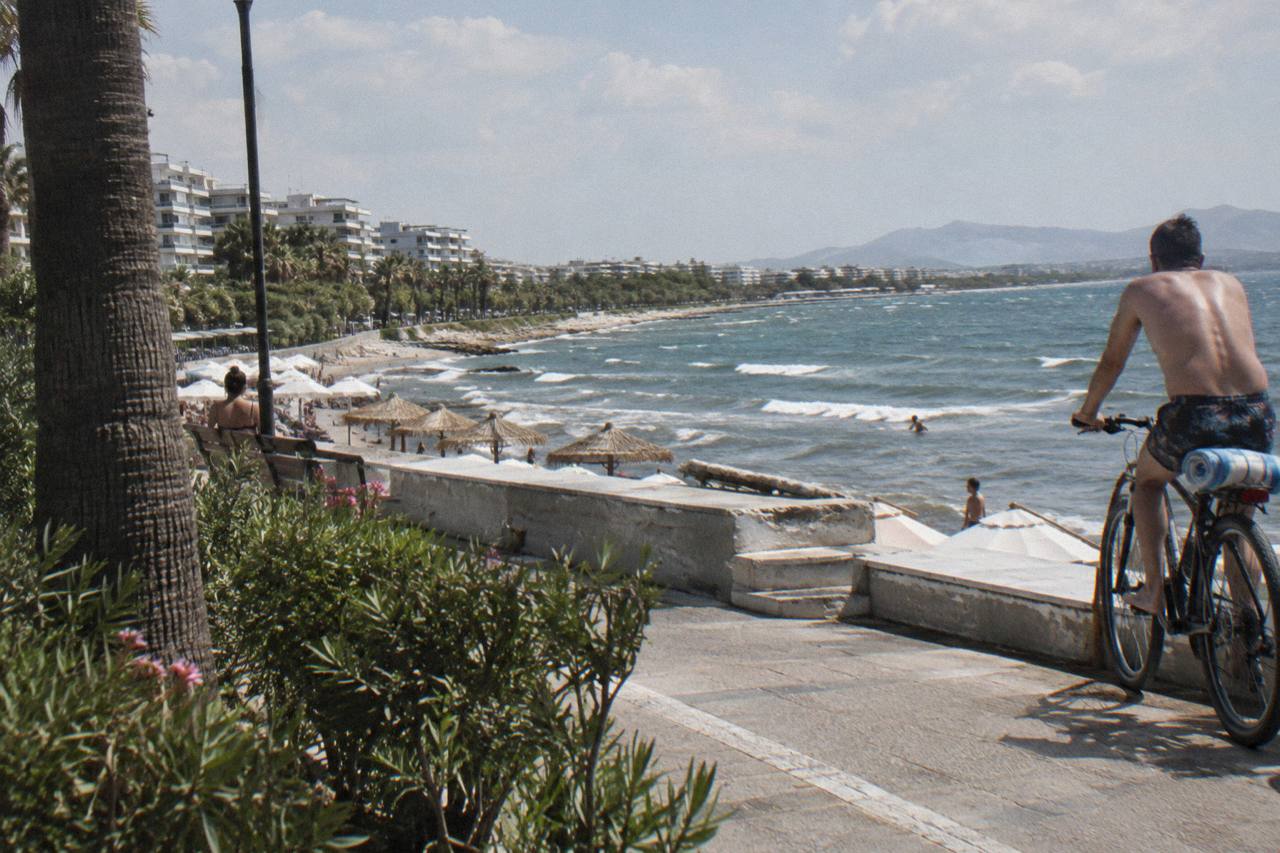
Yes, you can swim near Athens, and the beaches people mean when they say "Athens beaches" are the ones on the Athens Riviera, the coast running south of the city. Glyfada is the closest and best known, with Voula a little further south along the same shore, and both are easy to reach from central Athens. Glyfada is the closest of the organised resort beaches to the centre, a dense seafront of sand and narrow coves backed by the neighbourhood's cafes and shops. Voula lies south along the same shoreline, quieter and more local in feel, with organised stretches of sand with sunbeds. Both are named stops on guided coast rides out of the city, which is why they anchor most of this guide.
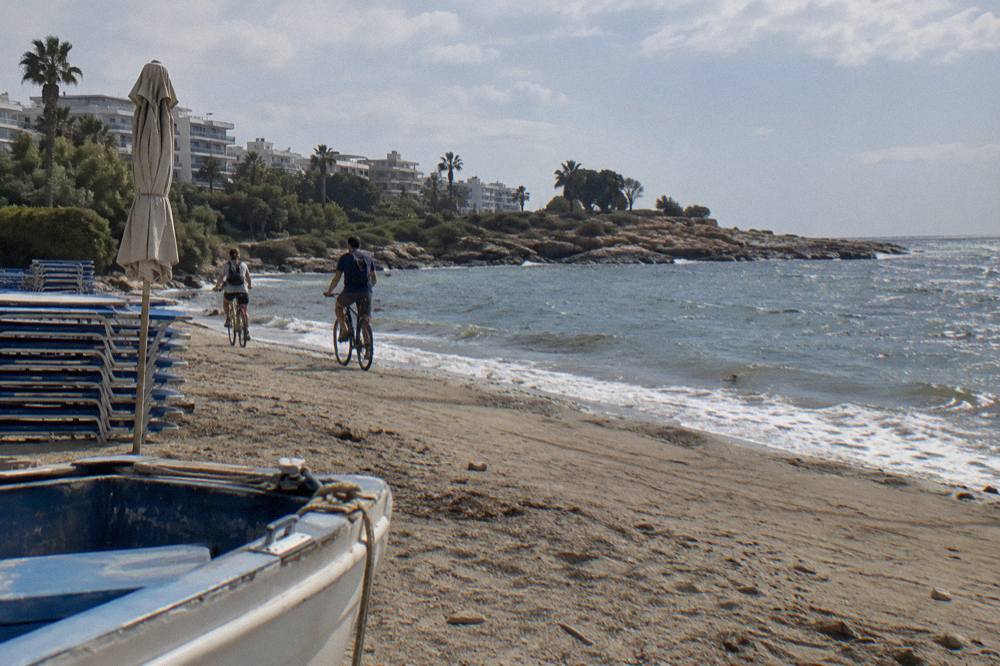
The Riviera runs well past these two, and the coast south of Voula continues through a chain of coves and organised beaches toward the far end of the Attic peninsula. Named beaches, beach clubs and entry fees along that stretch are outside what can be stated here as fact, so the practical advice is simple: treat Glyfada and Voula as the swimmable, reachable anchors, and check the operator's own description of any further stop before you book.
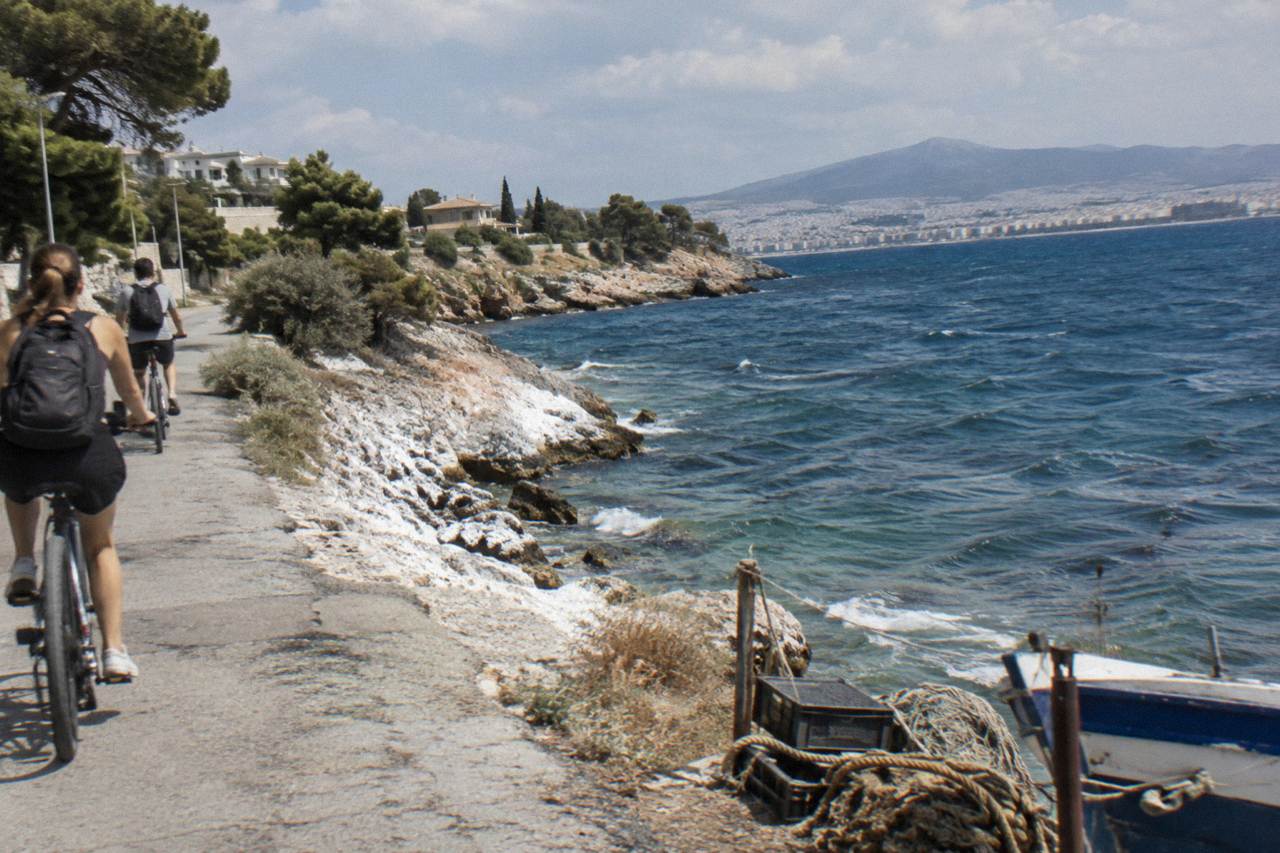
What distinguishes the Riviera beaches from a generic city beach is the water. The Saronic Gulf is clean, deep and swimmable through a long season, and the shore alternates between sand and low rock ledges that locals prefer for swimming. Facilities vary beach to beach, so if a proper changing room and sunbeds matter to you, pick a tour whose listing describes an organised swimming stop rather than a wild cove. The coastal rides described below spell out what each one does at the water.
One thing worth knowing before you plan: the Athens Marathon weekend closes central streets to all vehicles, bicycles included. The longest window runs Thursday 5 to Monday 9 November on Irodou Attikou and Vas. Georgiou B; Vas. Konstantinou, Arditou and M. Mousourou shut Friday to Sunday. Races fall on 7 and 8 November 2026. If your beach ride departs that weekend, expect the meeting-point approach itself to be affected, and book around it or check the operator's notes.
What Makes Glyfada And Voula The Easy Beach Day From Athens?
Glyfada and Voula work as beach days because they sit on the same southbound coast road out of the city, close enough that a half-day loop reaches them, and both have organised sand backed by a real neighbourhood rather than a bare shore. Glyfada is the classic choice: a seafront promenade, a sandy organised beach and a town behind it. Voula, further south, is quieter, with organised sand and a local crowd through the summer months.
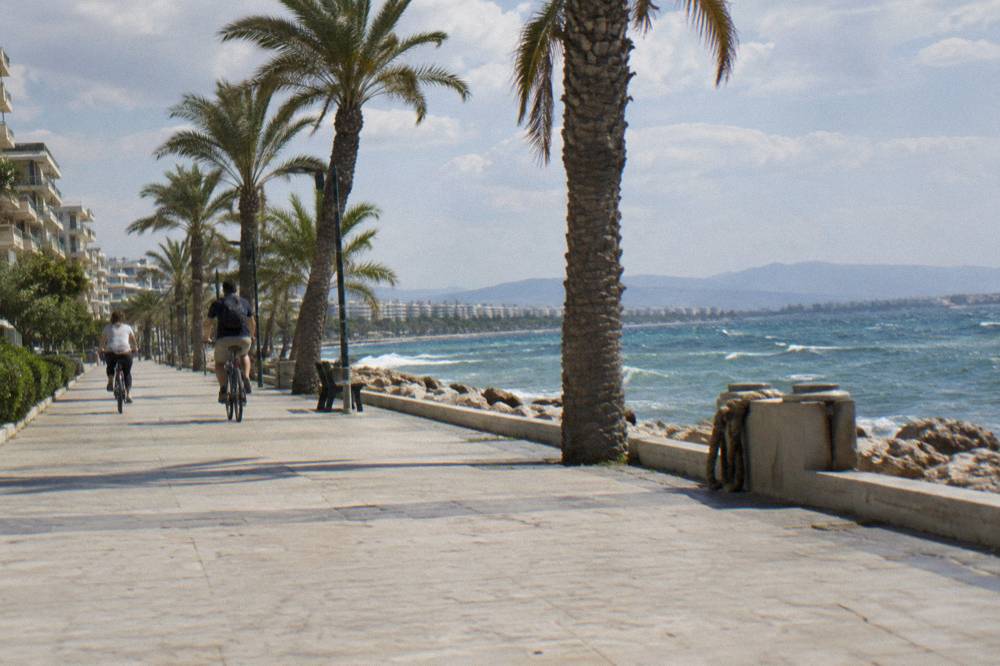
The reason a cycling site keeps returning to these two is that they anchor the guided coast rides. One operator runs a small-group ride that starts at Vergoti Square in Glyfada and rides the coast toward Voula, 2 hours long, from $28.66 per person, with a group capped at six riders, helmets included and bottled water included along the way. It is a short, affordable taste of the coast: the ride itself, not a full beach day, but it shows off the stretch of shoreline that the bigger tours build their routes around.
Because both beaches are backed by living neighbourhoods, the logistics of a beach day are easy. Tavernas, cafes and shops line the seafront, buses run the main avenue, and the beachfront itself is walkable end to end. That matters for a combined day, because a ride that ends near the water drops you into a place with food and shade rather than a bare shore. The two-tour pattern most riders settle into is either the long loop out of the centre with a swim inside the tour, or a short Riviera ride combined with an afternoon on the sand.
A quick note on the city itself: Athens has held a tender for a municipal e-bike rental network, at least 200 e-bikes across 50 stations, announced in September 2026 with the auction set for that month. No dock-based municipal scheme is documented as running, so self-guided rental riding to the beaches is not something you can plan around yet. The guided rides remain the structured way to see this coast by bike, and the Athens Riviera guide covers the coastline in more detail for riders who want the full picture.
How Do You Get To Athens Beaches Without A Car?
Getting to Athens beaches without a car comes down to a few realistic options: the metro paired with a surface leg for the Riviera stretches, public buses that run along the coast, or guided coast rides that handle the route for you. Each mode carries its own fixed rule for bringing bikes, so check that detail before you commit to one and plan your trip around it. On the metro, up to two bicycles travel in the last door of each train, carried by their owners, using elevators and not escalators, per the OASA passenger regulation. Buses and trolleybuses accept only folding bicycles placed in the special holder, at maximum dimensions of 33x66x80 cm. A standard bike therefore rides the metro, but never the bus.
The metro-plus-surface combination works because the beaches sit along avenues that a folding bike or a short walk covers from a metro or bus stop. It is not glamorous, but the fare is small: the 90-minute ticket is 1.20 EUR, the day ticket 4.10 EUR, the 5-day ticket 8.20 EUR and the 3-day tourist ticket 20.00 EUR, all per the OASA price list. A folding bike on a bus, plus a day ticket, is the budget route to the sand.
| Option To The Beaches | Bike Rule Or Fare | Notes |
|---|---|---|
| Metro | Up to 2 bikes, last door, use elevators | Works with any standard bike |
| Bus or trolleybus | Folding bikes only, holder up to 33x66x80 cm | Full-size bikes not carried |
| Hellenic Train suburban lines | Up to 4 conventional bikes free, carriages 2 and 4, on Athens-Chalkida, Piraeus-Airport, Piraeus-Kiato | Relevant for coastal rail legs |
| Guided coast ride | Bike, helmet and guide included on the rides listed here | Drops you at the water as part of a tour |
The train route matters less for Glyfada than for the wider coast, but it belongs in the picture: Hellenic Train carries conventional bicycles free on the Athens-Chalkida, Piraeus-Airport and Piraeus-Kiato services, up to four per train in carriages 2 and 4. Long-distance services with a luggage van charge 5 EUR per bicycle. None of that replaces the Riviera rides for a beach day, but riders planning multi-day trips use those carriage rules.
For most visitors, the guided rides solve the transport problem in one move. They include the bike, the helmet where the listing says so, and a guide who handles the route; you show up at a meeting point in the city or at Glyfada and the logistics dissolve. The tradeoff is price and schedule, which the sections below set out plainly.
Which Guided Rides Combine Athens Beaches With A Swim?
Yes, three guided rides pair Athens sightseeing with time in the water. The strongest pick is a coastal ride that builds in an actual swimming stop, followed by a city-to-sea e-bike route that mixes sea air with a pastry tasting. If you want something shorter, a Glyfada to Voula cruise along the coast covers the classic Athenian Riviera stretch with plenty of chances for a quick dip. The first is the closest thing to a beach day inside a tour: the Coastal Ride with a swimming stop runs 3 hours 30 minutes from Suncycling Athens, from $56.16 per person, on regular bikes with a group capped at 10, helmets included and free cancellation per the listing. The ride goes out along the coast and stops for a swim, which turns the tour into the day itself rather than a sightseeing sprint. If you're still weighing whether a guided ride is the right way to spend your day, our breakdown of what Athens bike tours actually cost and when they beat going solo helps you decide.
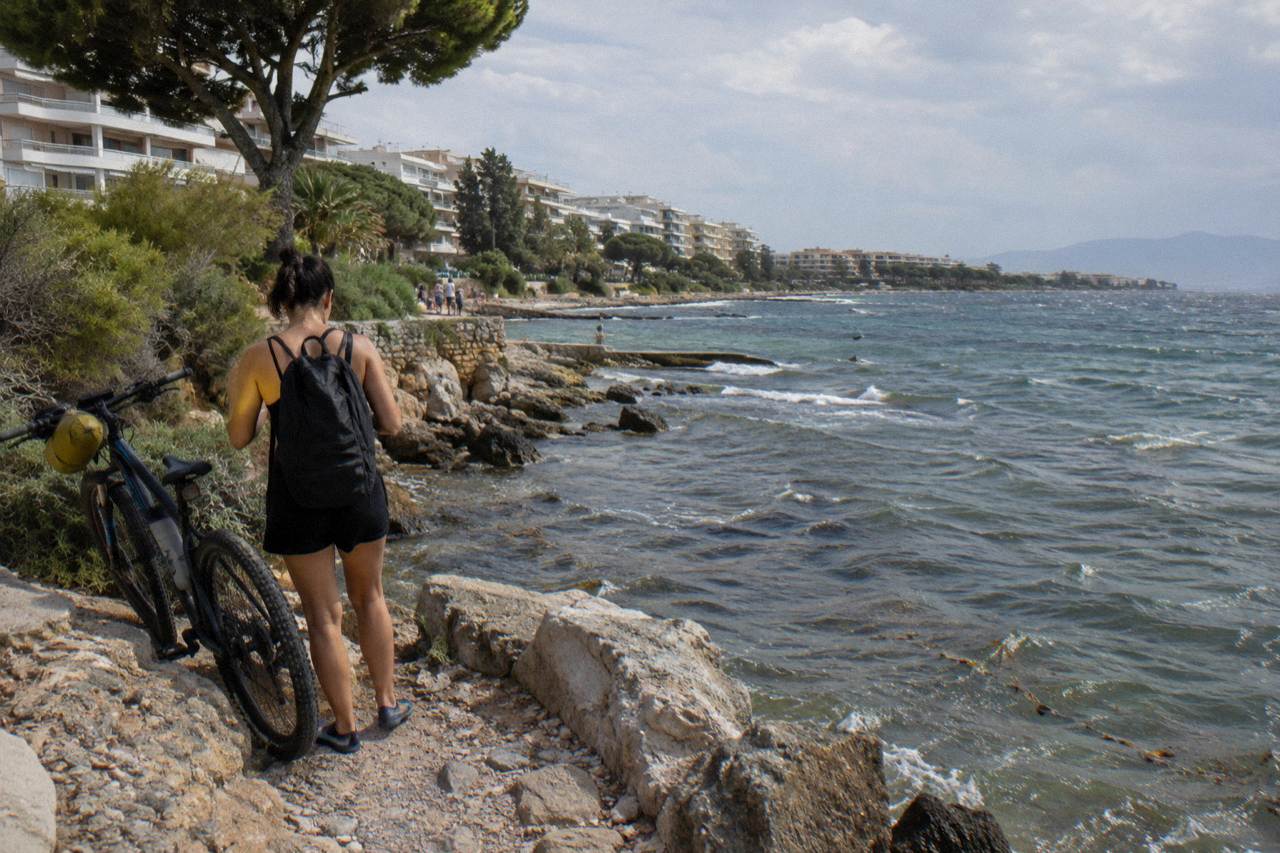
The second is the City to Sea e-bike ride from Athens by bike, 4 hours 30 minutes from $51.58 per person, rated 4.9 across 273 reviews. It threads the city's highlights out toward the water on e-bikes, with a group capped at 15, helmet and guide included and a pastry tasting described on the listing. The not-included line on that one lists food and drinks separately from the tasting, so read what the operator covers. Hotel pickup is not included, and free cancellation is listed.
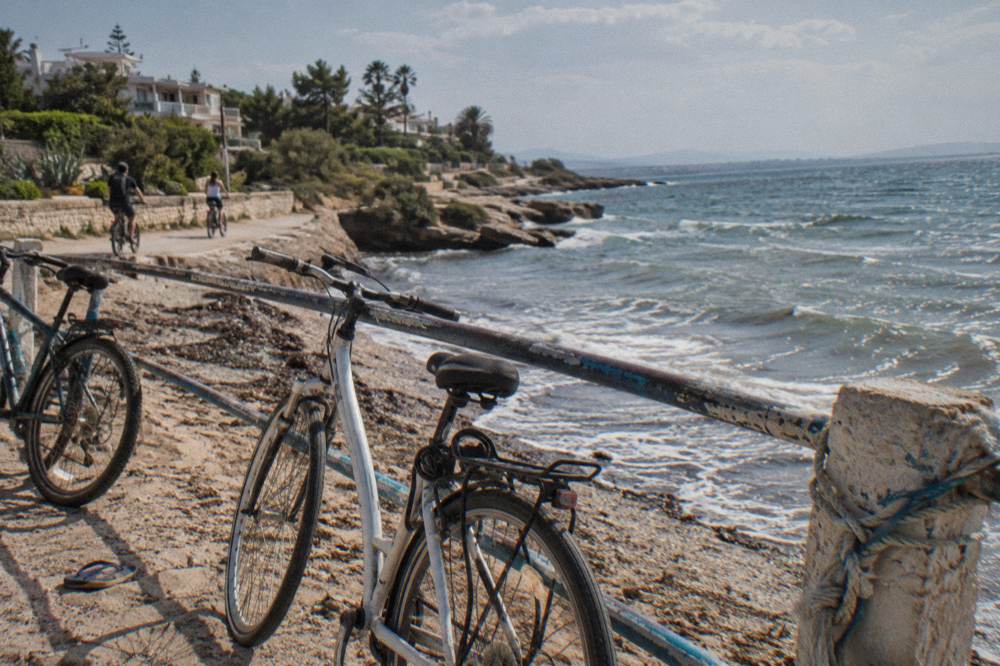
The third is the Glyfada to Voula ride itself, which starts in Glyfada rather than the centre and suits anyone staying on the coast or willing to ride out to Vergoti Square. It runs 2 hours, from $28.66 per person, on regular bikes with a group capped at six, a helmet included and bottled water included. It carries only six reviews, so it is best treated as a short, cheap option rather than a proven classic, and coffee or tea are on the not-included list.
| Ride | Operator | Duration | From Price | Group Cap | Beach Angle |
|---|---|---|---|---|---|
| Coastal Ride, Swimming Stop | Suncycling Athens | 3 hours 30 minutes | $56.16 | 10 | Swimming stop built in |
| City to Sea E-Bike, Pastry Tasting | Athens by bike | 4 hours 30 minutes | $51.58 | 15 | City highlights out to the water |
| Glyfada To Voula Coast Ride | Melima Experiences | 2 hours | $28.66 | 6 | Starts on the coast itself |
A fourth deserves a mention for riders who want the seaside without the full tour: the E-Bike Ride to the Seaside from We Bike Athens, 3 to 3.5 hours, from $56 per person, rated 4.8 across 77 reviews, with e-bike, helmet and guide listed among the inclusions on the booking page, meeting at Apostolou Pavlou 53. Food and drinks and hotel pickup are not included, per the listing, and free cancellation is described. It fits the same slot as the two bigger rides at a similar price, with a guide and an e-bike doing the distance work.
The pairing question is really about what kind of day you want. The swimming-stop ride is the one that answers the beach brief most directly, because the water is on the itinerary rather than at the end of it. The city-to-sea ride buys a broader day, city sights plus the coast in one loop, and the tasting makes it feel like a full Athens outing. The Glyfada ride is a gentle top-up for a day already anchored on the coast.
When Is The Sea Warm Enough Near Athens?
The swim season around Athens runs roughly from late May into October, with July and August the warmest and driest months, mean sea-adjacent air of about 28 C and almost no rain, and sea temperatures lagging the air by a month or two. The air numbers come from the HNMS climate normals for the Elliniko coastal station, and central Athens runs warmer by day than that coastal station reads. If those August numbers have you second-guessing your dates, our guide to whether Athens heat is too much in high summer explains what to expect and how to plan around it.
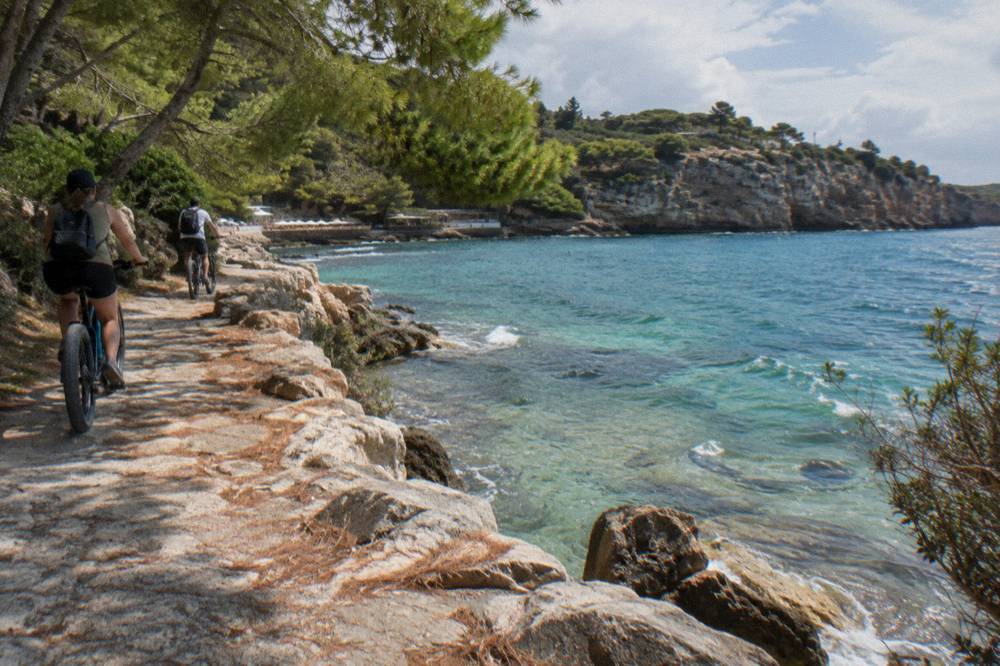
For a swimming trip, the useful reading of the table is the shoulder seasons. June averages 25.6 C with only 3.6 rain days; September averages 24.3 C with 4.7; October is still 19.6 C on average with 8.6 rain days. July and August are hot, with heat often exceeding 35 C, so the meltemi's dry air and any breeze that comes with it matter more than rain does at this time of year.
| Month | Mean Air C | Max Air C | Rain Days |
|---|---|---|---|
| May | 20.9 | 24.4 | 6.4 |
| June | 25.6 | 29.2 | 3.6 |
| July | 28.3 | 32.2 | 1.7 |
| August | 28.2 | 32.2 | 1.6 |
| September | 24.3 | 28.3 | 4.7 |
| October | 19.6 | 23.4 | 8.6 |
One heat caveat belongs on any beach page about this coast. In one documented case from July 2025, the Ministry of Culture closed the Acropolis from 1 p.m. to 5 p.m. on two afternoons near 40 C, a pattern that repeats in heatwaves even though specific 2026 closures are not confirmed. The beach is the natural answer to an Athens heat day: the water is the one place in the city that does not need a schedule change.
What Do The Coastal Rides Cost Compared To City Tours?
Coastal and seaside rides cost between $28.66 and $56.16 per person, which places them squarely within the same price band as the classic city tours. That means the decision between the two comes down less to budget and more to the kind of itinerary you want, since neither option carries a meaningful price premium over the other. The cheapest beach-adjacent ride is the Glyfada to Voula coast ride at $28.66 for 2 hours. The swimming-stop coastal ride is $56.16 for 3 hours 30 minutes. The city-to-sea e-bike ride is $51.58 for 4 hours 30 minutes. For comparison, the classic 2.5-hour city rides start from $33.24 to $40.12, and the most reviewed city ride of all, the Regular or E-Bike tour with an optional Acropolis visit, runs from $40.12 with a 5.0 rating across 3,666 reviews.
What the price buys varies more than the numbers suggest. Regular-bike rides cost less because the bikes cost less to run and the routes stay flat and central. E-bike rides price higher and buy hills without effort, which matters on any route that leaves the flat centre toward the coast. Longer rides price higher still and usually fold in food, drinks or a stop that a short ride skips.
Private options exist on this coast too, and they price like privates. The Private Electric Bike Tour from Athens by bike runs 3 hours from $80.23 per person, with the total depending on group size, and the Private E-Bike Ride from We Bike Athens runs 2 hours 30 minutes from $85.97 per person, also group-size dependent. Neither includes a swimming stop as a listed feature, so treat them as city rides with privacy, not beach days.
The honest budgeting frame: a shared beach ride costs about the same as a shared city ride, so pick the day you want rather than the cheaper one. If the swim matters, the coastal ride with a swimming stop is the only listing here that names a swim inside the tour, and its $56.16 from-price is the one to plan around.
What Should You Pack For A Swim Stop On An Athens Ride?
Pack light and layer for a ride with a swim inside it: swimwear under riding clothes, a quick-dry towel, sun protection, water, and a dry bag for the phone and wallet, plus a change of clothes if the tour ends near a taverna. The swimming-stop ride includes the bike and helmet, and its listing describes free cancellation, but food and drink logistics are yours unless the listing says otherwise. The Glyfada ride includes bottled water; the others mostly do not, so check the inclusions line before you pack.
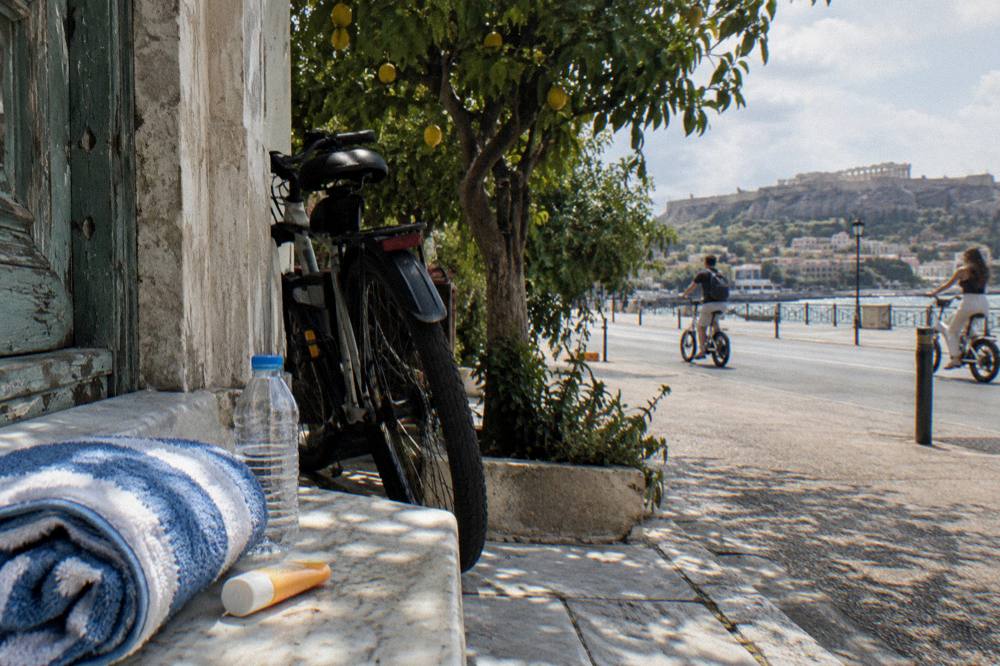
Swimwear under clothes is the practical move on any tour with a swimming stop, because changing facilities vary by beach and a guided ride keeps moving. A quick-dry towel beats a cotton one in a bag. Sun protection matters more than people expect, especially on a ride of 3 hours or more under a July sky, and the same goes for water: the listing tells you what is included, so check it before assuming. The fuller checklist lives in the what to bring for an Athens bike tour guide.
Two legal points from the road code are worth folding into beach-day planning. Helmets are recommended, not mandatory, for bicycle riders under Article 44 of the Greek road code, though the rides here include one where the listing says so. Riding two abreast is prohibited, and holding a phone or wearing headphones while riding carries a 350 EUR fine, so a stop to answer a message is the correct way to use a phone on the move.
- Riviera And Coast Rides$28.66
- E-Bike Tours$33.24
- Sunset And Night Rides$33.24
- City And Acropolis Rides$40.12
- Private And Day Trips$61.90
Footwear is the small thing people forget. Rocky entries into the sea suit water shoes more than bare feet, and the coast south of Glyfada alternates sand with low rock ledges. A dry bag or a zip pocket keeps a wallet and phone safe through a swim stop, and anything not needed on the ride is better left at the hotel than carried to the beach.
Is A Beach Day From Athens Worth Booking A Tour For?
A guided beach ride is worth booking if the swim is the point of the day, if you want the coast explained rather than just travelled, or if you would rather not handle buses and rental logistics in a new city. The swimming-stop coastal ride turns the beach into the itinerary rather than a destination at the end of it, and the city-to-sea ride folds the coast into a full Athens day, from $51.58 per person with a 4.9 rating across 273 reviews.
The case against is equally plain. If your hotel is on the coast, or your group just wants sand and a taverna, the short Glyfada ride at $28.66 or a plain trip to the beach beats a long loop through the city. And if you are visiting in the depths of the cool season, November through March, when rain days climb past 10 a month and mean air sits around 11 to 15 C, a swimming tour is the wrong product, and a city ride is the better use of the day; the best time to cycle in Athens guide unpacks that calendar.
For a summer or September visit, the beach rides fill a real gap in the Athens itinerary. The city's ancient core is dense, hot and walked; the coast is the counterweight. A ride that links the two gives a day two halves instead of one long hot morning among stones, and the sea at the end of the ride is the part of Athens that no itinerary lists by ruin. Bike Tours Athens exists because the coastline is the half of the city most visitors never plan for, and a swim inside a ride is the most efficient way to claim it.
Common Questions About Athens Beaches
Which Athens Beaches Can You Swim At?
The swimmable beaches closest to Athens sit along the Riviera, with Glyfada and Voula the two named stops reached on guided coast rides. Glyfada is the dense organised seafront nearest the city, and Voula lies south along the same coast with organised sand and a quieter local feel.
How Do You Get To The Athens Riviera Beaches Without A Car?
Realistic options are the guided coast rides, the metro with a surface leg, or a bus. On the metro, up to two bicycles travel in the last door of each train using elevators, and buses carry only folding bicycles in a holder of at most 33x66x80 cm. Fares are small, with a day ticket at 4.10 EUR and a 3-day tourist ticket at 20.00 EUR.
Is There A Bike Tour From Athens That Includes A Swimming Stop?
Yes. The Coastal Ride and Swimming Adventure from Suncycling Athens runs 3 hours 30 minutes from $56.16 per person on regular bikes, with a group capped at 10, helmets included and free cancellation per the listing. It meets at Thessalonikis 172 in Athens and rides the coast with a swimming stop built into the route.
How Much Do Athens Beach Bike Tours Cost?
The beach-relevant rides span from $28.66 to $56.16 per person. The Glyfada to Voula coast ride is 2 hours from $28.66, the coastal ride with a swimming stop is 3 hours 30 minutes from $56.16, and the City to Sea e-bike ride is 4 hours 30 minutes from $51.58 with a pastry tasting.
When Is The Sea Warm Enough To Swim Near Athens?
The swim season runs roughly from late May into October. July and August are the warmest months, with mean air near 28 C and maxima around 32.2 C under the HNMS climate normals for the Elliniko station, while June and September sit a few degrees cooler with very few rain days. November turns wet, with over 10 rain days on average.
Will Marathon Weekend Affect A Beach Ride From Athens?
It can. The 43rd Athens Authentic Marathon runs on 7 and 8 November 2026, with closures to all vehicles, bicycles included: Irodou Attikou and part of Vas. Georgiou B from Thursday 5 to Monday 9 November, and Vas. Konstantinou, Arditou and Vas. Sofias in shorter windows across the race weekend. If your ride departs that weekend, expect the approach to the meeting point to be affected.